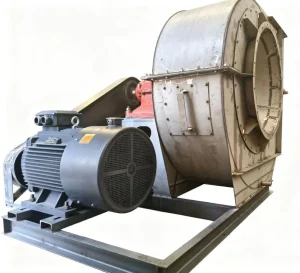
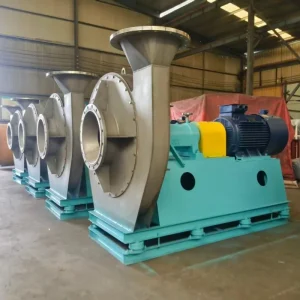
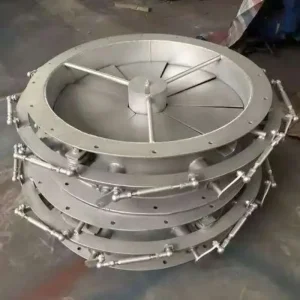
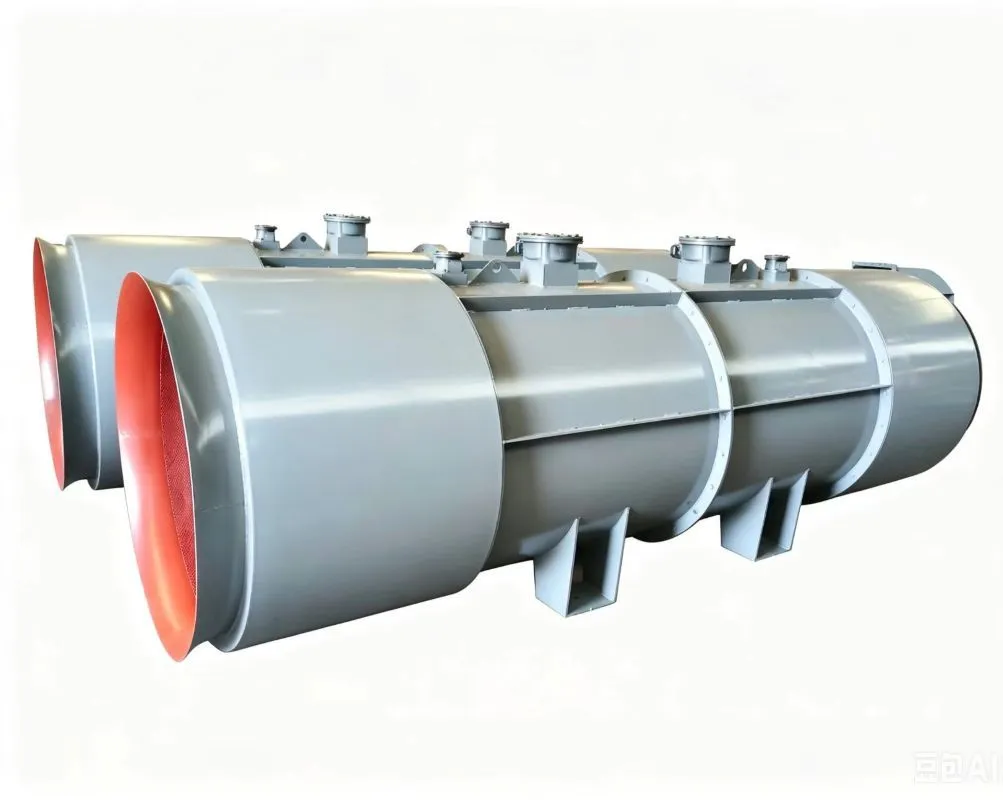
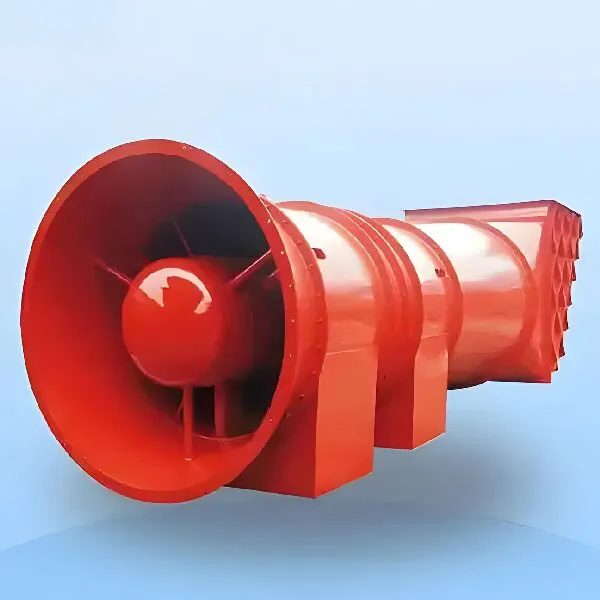
Harsh industrial environments don’t forgive weak components. In chemical processing plants, flue gas desulfurization units, or coastal refineries, standard carbon-steel fans fail within months—pitting, cracking, seizing under chloride-laden air or acidic vapor. The real question isn’t if corrosion will strike—it’s when, and how much downtime, repair cost, and safety risk it will bring. That’s why engineers at Zibo Hongcheng Fan Co., Ltd. stopped designing “corrosion-resistant enough” fans. They built stainless steel anti-corrosion fans engineered for zero compromise: 316L stainless steel housings, shafts, impellers, and fasteners; fully welded seams; passivated surfaces; and dynamic balancing certified to ISO 1940 G2.5. Not as an option—but as the baseline.
Why Stainless Steel Isn’t Just “Better”—It’s Non-Negotiable in Critical Applications
We’ve seen three common failure patterns in corrosive settings: first, galvanic corrosion where carbon-steel frames contact stainless impellers—creating micro-currents that eat away at weld joints. Second, crevice corrosion inside bolted flanges exposed to condensate and sulfur dioxide. Third, stress-corrosion cracking in fan shafts under cyclic thermal load and H₂S exposure. Standard epoxy-coated fans mask these issues—until coating chips during maintenance or thermal cycling, exposing raw steel underneath. A stainless steel anti-corrosion fan eliminates the root cause: no coating to degrade, no dissimilar metals to couple, no hidden corrosion traps. At Zibo Hongcheng, every FBD-Ⅱ series fan destined for coal gas booster service uses seamless 316L ducting and impeller blades with a minimum 2.5 mm wall thickness—not just to resist acid mist, but to withstand abrasive particulates without thinning below structural tolerance.
Real-World Performance Demands Shape Every Design Decision
Some might argue stainless steel is overkill for mild humidity. But field data tells another story. In a Shandong chemical plant running continuous 24/7 operation, a coated centrifugal fan lasted 14 months before catastrophic bearing seizure from chloride migration into grease. Its stainless steel anti-corrosion replacement—same airflow (28,000 m³/h), same static pressure (3,200 Pa), same motor rating (55 kW)—has operated 47 months with zero unplanned shutdowns. Why? Because Zibo Hongcheng doesn’t just swap materials. They re-engineer: enlarged bearing housings with double-lip seals rated for IP68; non-contact labyrinth seals on shaft extensions; and impeller blade profiles optimized for lower tip speed—reducing erosion while maintaining efficiency. Their 9-19 high-pressure stainless blower, widely used as boiler primary fans in biomass-fired plants, delivers 84.3% peak efficiency at 1,450 rpm—not despite corrosion resistance, but because of integrated thermal and mechanical design discipline.
Customization That Works—Not Just Marketing Claims
“Customizable” means little unless it ships on time, meets spec, and survives commissioning. At Zibo Hongcheng, customization starts with application engineering—not sales sheets. When a titanium smelting facility needed explosion-proof fans resistant to molten salt vapor at 450°C, their team didn’t default to generic specs. They reviewed actual flue gas composition reports, mapped thermal gradients across the fan housing, selected Inconel 625 for inlet cones, added water-jacketed bearing pedestals, and validated performance on their in-house 1,200 kW test rig—measuring vibration, temperature rise, and pressure decay over 72 hours under simulated load. No off-the-shelf catalog number. No “subject to engineering review.” Just documented, repeatable, field-proven execution. Their stainless steel anti-corrosion fan portfolio includes 17 variants with ATEX, IECEx, or CCC-Mine certifications—and every unit ships with traceable material test reports (MTRs), dynamic balance certificates, and full-load performance curves signed by a registered mechanical engineer.
Reliability You Can Verify—Before Installation
Trust comes from transparency—not brochures. Every stainless steel anti-corrosion fan from Zibo Hongcheng undergoes four mandatory checkpoints: raw material verification via handheld XRF spectrometer (confirming Mo ≥ 2.5%, Cr ≥ 16.5%, Ni ≥ 10.5%); dimensional inspection using CMM-certified fixtures; functional testing at 110% rated speed for 30 minutes with real-time vibration monitoring (<0.71 mm/s RMS at operating speed); and final leak-check with helium mass spectrometry on all welded seams. Nothing ships without a QR-coded digital dossier linking to test videos, MTR scans, and calibration logs. That’s how you avoid the $120,000 mistake: installing a “stainless” fan only to find the baseplate is 304—not 316L—and fails in six months near a chlorine scrubber.
Industrial airflow isn’t about moving air—it’s about sustaining process continuity, protecting personnel, and avoiding cascading failures. A stainless steel anti-corrosion fan isn’t a cost center. It’s the first line of defense against systemic risk. Zibo Hongcheng Fan Co., Ltd. builds them not to meet minimum standards—but to outlive the equipment they serve. Because in harsh environments, durability isn’t optional. It’s the only specification that matters.