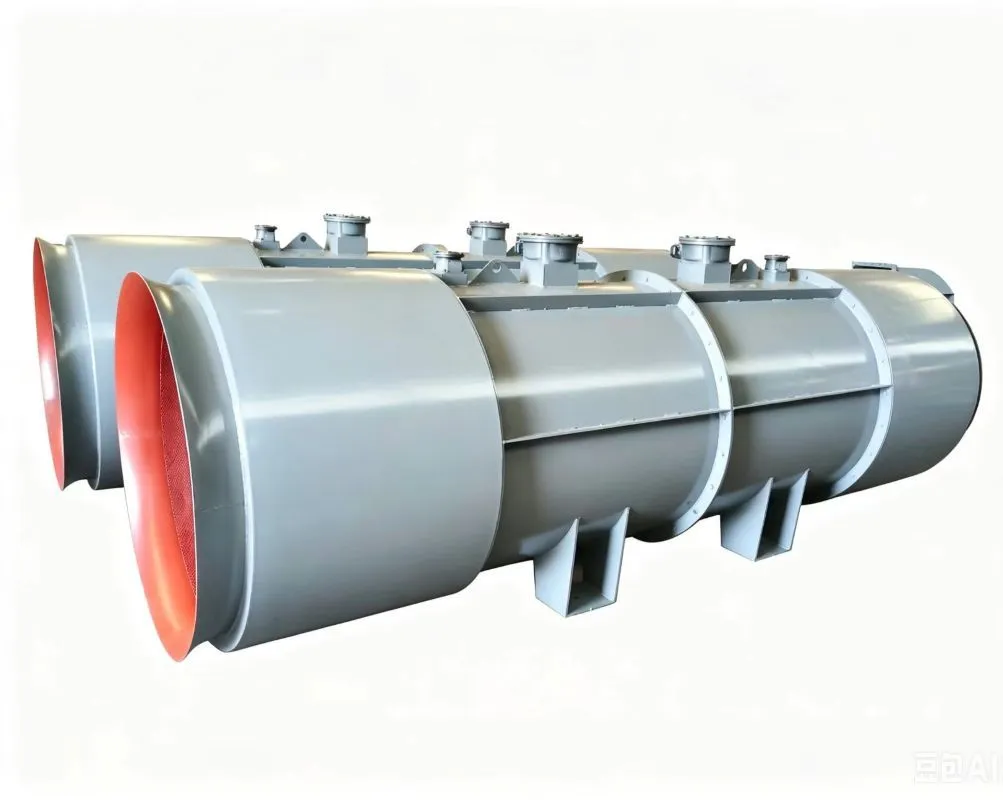
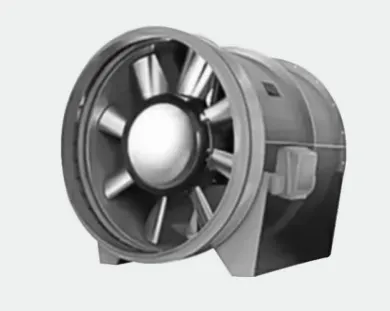
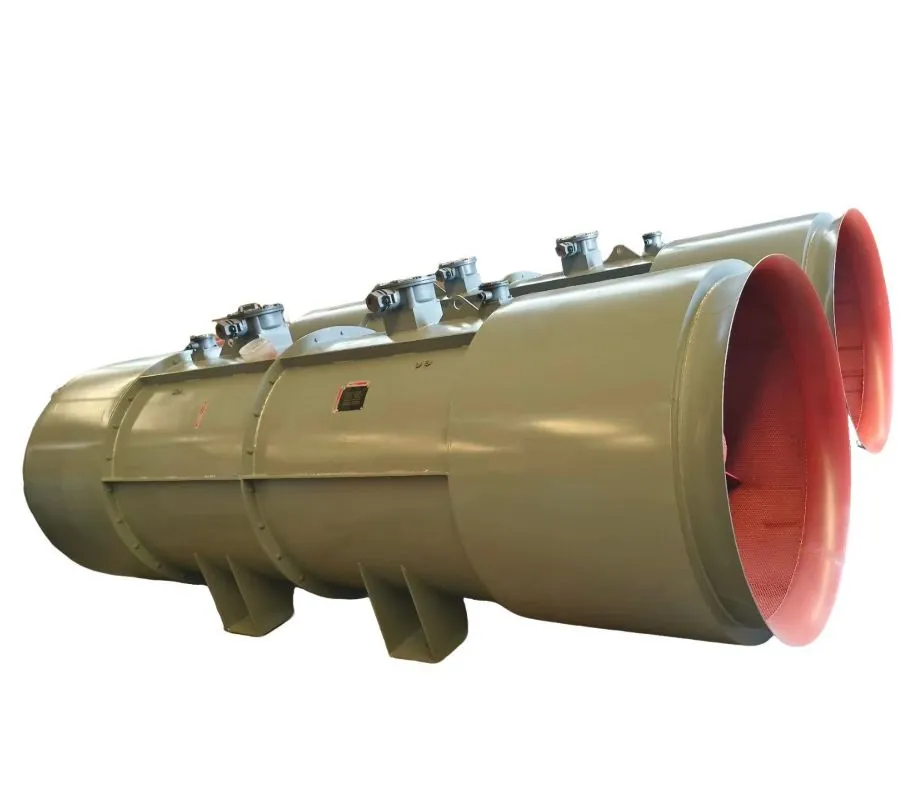
A mine ventilation fan silencer is a critical acoustic component designed to reduce noise generated by high-pressure industrial fans in underground and surface mining operations. As a leading manufacturer, we provide factory-direct solutions that ensure compliance with strict occupational health standards while maintaining optimal airflow efficiency. Our engineered silencers utilize advanced absorption technologies to dampen aerodynamic noise without compromising system performance.
What Is a Mine Ventilation Fan Silencer?
A mine ventilation fan silencer serves as an essential interface between powerful ventilation machinery and the working environment. In mining operations, main fans often generate noise levels exceeding 100 dB, posing severe risks to worker hearing and communication safety. These devices are specifically engineered to attenuate sound energy across a broad frequency spectrum.
The primary function involves converting acoustic energy into heat through friction within specialized lining materials. Unlike standard industrial mufflers, mining silencers must withstand harsh conditions including high humidity, dust loads, and potential explosive atmospheres. The design balances noise reduction with minimal pressure loss to ensure the ventilation network remains effective.
Modern units are typically constructed from heavy-gauge steel with internal baffles lined with non-combustible acoustic media. They are installed at the intake or discharge of main fans, auxiliary boosters, and localized cooling systems. Proper selection depends on fan characteristics, duct geometry, and specific regulatory limits imposed by local mining authorities.
How Mine Ventilation Silencers Work: Core Principles
Understanding the operational mechanics is vital for selecting the right equipment. The noise generated by mine fans is primarily aerodynamic, caused by turbulence and blade passage frequencies. Effective silencing requires a multi-stage approach targeting both low-frequency rumble and high-frequency hiss.
Absorptive vs. Reactive Attenuation
Most high-performance mine ventilation fan silencers employ a hybrid design combining absorptive and reactive principles. Absorptive silencers use porous materials to dissipate sound energy, while reactive designs use chamber expansions to reflect sound waves back to the source.
- Absorptive Mechanism: Sound waves enter perforated facings and travel into dense fibrous or foam linings. Friction converts acoustic energy into negligible amounts of heat.
- Reactive Mechanism: Internal baffles create expansion chambers that cause sound waves to interfere destructively, canceling out specific problematic frequencies.
- Hybrid Efficiency: Combining both methods ensures broadband attenuation, covering the full range of noise produced by variable speed drives and fixed-pitch blades.
The effectiveness of these mechanisms relies heavily on the thickness of the acoustic lining and the geometry of the airflow path. Thicker linings generally offer better low-frequency performance but require larger physical footprints. Our engineering team optimizes this balance to fit existing mine infrastructure constraints.
The Role of Baffle Design
Internal baffles are the heart of the silencer structure. They divide the airflow into multiple channels, increasing the surface area available for sound absorption. The shape of these baffles—whether rectangular, circular, or elliptical—dictates the flow dynamics and pressure drop characteristics.
In high-velocity applications, baffles are often tapered or streamlined to prevent flow separation, which can generate additional noise and reduce fan efficiency. The spacing between baffles is calculated based on the wavelength of the target noise frequencies, ensuring maximum interaction between the sound waves and the absorbing material.
Key Features of High-Performance Mining Silencers
Selecting a superior product requires evaluating specific technical features that distinguish premium manufacturers from generic suppliers. A high-quality mine ventilation fan silencer must deliver consistent performance over decades of continuous operation in extreme environments.
Durable Construction Materials
Mining environments are corrosive and abrasive. The outer casing is typically fabricated from galvanized steel or stainless steel to resist rust and chemical attack. In coastal mines or those with acidic water issues, specialized coatings such as epoxy or zinc-rich primers are applied for enhanced protection.
Internal components face even greater challenges. The acoustic lining must be protected by a robust facing material, usually perforated aluminum or galvanized steel. This facing prevents erosion of the soft absorbent core while allowing sound waves to penetrate. The perforation pattern is precisely calculated to optimize acoustic transparency without weakening the structural integrity.
Fire Resistance and Safety Compliance
Safety is paramount in underground mining. All acoustic materials used in our silencers are strictly non-combustible, meeting international standards such as ISO 3975 or equivalent regional regulations. Unlike some industrial foams that may melt or emit toxic fumes, our mineral wool and glass fiber cores remain stable at extremely high temperatures.
- Non-combustible Core: Uses high-density rock wool or glass fiber that does not support flame propagation.
- Toxic Fume Prevention: Ensures that in the event of a fire, the silencer does not contribute to smoke toxicity.
- Structural Integrity: Maintains shape and function even under thermal stress, preventing collapse into the airflow path.
Aerodynamic Optimization
A common misconception is that silence comes at the cost of airflow. However, advanced computational fluid dynamics (CFD) allows us to design silencers with minimal pressure loss. The internal geometry is smoothed to reduce turbulence, ensuring that the fan operates near its peak efficiency point.
Pressure loss data is provided for every model, allowing engineers to accurately predict system performance. Low resistance translates to lower energy consumption and reduced operational costs over the lifespan of the ventilation system. This efficiency is a key differentiator for factory-direct products where custom optimization is standard.
Types of Mine Ventilation Fan Silencers
Different mining scenarios demand different silencing solutions. Understanding the available types helps in specifying the correct unit for main fans, booster fans, or auxiliary ventilation systems.
Rectangular Dissipative Silencers
These are the most common type for large main fans handling massive air volumes. They feature a rectangular cross-section with internal splitters dividing the flow. Their modular design allows for easy expansion; additional sections can be added in series to increase attenuation if noise limits change.
Rectangular units are ideal for surface installations where space is less constrained but high performance is required. They can be customized with weather hoods and rain louvers to protect the internal media from moisture ingress, which could otherwise degrade acoustic performance.
Circular Pod Silencers
For round ductwork or fans with circular outlets, pod silencers offer a compact and efficient solution. These consist of a central bullet-shaped core surrounded by an annular airflow passage lined with acoustic material. They are particularly effective for mid-to-high frequency noise reduction.
Circular designs are often preferred for underground installations due to their ability to withstand higher static pressures and their streamlined profile, which minimizes drag. They are frequently used in conjunction with auxiliary fans and vent bags in development headings.
Custom-Built Hybrid Units
Complex ventilation networks often require bespoke solutions. Custom hybrid silencers combine elements of rectangular and circular designs to fit irregular spaces or unique airflow requirements. These units are engineered from scratch based on site-specific acoustic surveys and fan curve data.
Factory-direct manufacturing excels in this area, offering flexibility that off-the-shelf suppliers cannot match. Whether the requirement involves unusual dimensions, extreme temperature ratings, or specialized mounting configurations, custom units ensure a perfect fit and optimal performance.
Comparative Analysis: Standard vs. Premium Silencers
When evaluating options for a mining project, the difference between standard industrial silencers and those built specifically for mining can significantly impact long-term operational success. The following table highlights the critical distinctions.
| Feature | Standard Industrial Silencer | Premium Mine Ventilation Fan Silencer |
| Acoustic Media | Generic fiberglass, may degrade in humidity | High-density, hydrophobic mineral wool designed for harsh conditions |
| Casing Material | Light-gauge steel, basic paint finish | Heavy-gauge galvanized or stainless steel with corrosion-resistant coatings |
| Fire Rating | Often combustible or limited rating | Fully non-combustible, meeting strict mining safety codes |
| Pressure Loss | Higher resistance due to generic baffle design | Optimized via CFD for minimal energy penalty |
| Dust Protection | Standard perforated facing | Reinforced facing with optimized hole patterns to resist dust clogging |
| Lifespan | 5-8 years in moderate environments | 15+ years in aggressive mining environments |
The investment in a premium unit tailored for mining pays dividends through reduced maintenance, lower energy bills, and sustained compliance with evolving noise regulations. Standard units often fail prematurely when exposed to the constant vibration and particulate load typical of mine sites.
Installation Guidelines for Optimal Performance
Even the best-engineered silencer will underperform if installed incorrectly. Proper installation ensures that the theoretical noise reduction values are achieved in practice. Following a structured approach minimizes leaks and flow disturbances.
Step-by-Step Installation Process
- Site Survey: Measure the exact dimensions of the fan outlet and available space. Check for obstructions and verify alignment with the ductwork.
- Foundation Preparation: Ensure the supporting structure is level and capable of bearing the weight of the silencer, especially when filled with dense acoustic media.
- Sealing Connections: Use high-quality gaskets between the fan, silencer, and ducting. Any air leak bypasses the silencer, drastically reducing its effectiveness.
- Alignment: Align the silencer axis perfectly with the fan outlet to prevent turbulent entry losses. Misalignment can cause vibration and increased noise.
- Support Mounting: Install flexible connectors or vibration isolators to decouple the silencer from the fan structure, preventing structure-borne noise transmission.
- Final Inspection: Check all fasteners, seals, and access doors. Verify that no debris has entered the unit during assembly.
Regular maintenance is also crucial. Periodic inspections should check for signs of media degradation, casing corrosion, or dust accumulation on the facing. Cleaning or replacing damaged sections promptly restores performance and extends the unit’s service life.
Applications Across the Mining Sector
The versatility of modern mine ventilation fan silencers allows them to be deployed across various stages of the mining lifecycle, from exploration to closure. Each application presents unique challenges that dictate the specific configuration required.
Main Surface Fans
Surface main fans are the lungs of an underground mine, moving enormous volumes of air. These installations are often located near administrative buildings or residential areas, making noise control a community relations issue as well as a safety one. Large rectangular dissipative silencers are typically used here to achieve attenuation levels of 20-30 dB(A).
Underground Booster Stations
In deep mines, booster fans are installed underground to overcome friction losses in long drifts. Space is limited, and the environment is hot and humid. Compact circular pod silencers or short rectangular units with high-temperature ratings are preferred. Durability against rock falls and vibration is a key consideration.
Auxiliary and Local Ventilation
Development headings rely on auxiliary fans to deliver fresh air to the face. These fans are mobile and subject to frequent relocation. Lightweight, ruggedized silencers that can withstand rough handling are essential. They protect workers operating closest to the noise source, ensuring clear communication for safety protocols.
Tunneling and Civil Engineering
Beyond traditional mining, these silencers are vital in tunnel construction projects where diesel-powered equipment and large ventilation fans operate in confined spaces. The same principles of noise reduction and air quality preservation apply, protecting workers from long-term hearing damage.
Factors Influencing Silencer Selection
Choosing the right unit involves a complex interplay of technical parameters. Engineers must balance acoustic goals with physical constraints and budgetary considerations. Ignoring any of these factors can lead to suboptimal results.
Noise Criteria and Regulations
The starting point is always the target noise level. Regulatory bodies define maximum permissible exposure limits, often around 85 dB(A) for an 8-hour shift. The silencer must reduce the fan’s source noise to meet this limit at the receiver location, accounting for distance and environmental attenuation.
Airflow Volume and Velocity
The volume of air (m³/s) and the velocity (m/s) determine the size of the silencer. Higher velocities require more robust internal structures to prevent erosion and noise generation within the silencer itself. Oversizing a unit can reduce velocity and improve performance, but increases cost and space requirements.
Frequency Spectrum of Noise
Fans generate noise at specific frequencies depending on blade count and rotation speed. A detailed acoustic analysis identifies the dominant frequencies. The silencer design is then tuned to target these specific bands, rather than applying a generic solution that might miss the primary noise contributors.
Environmental Conditions
Temperature, humidity, and dust concentration influence material selection. In hot mines, materials must retain their structural properties at elevated temperatures. In wet mines, hydrophobic treatments prevent water logging of the acoustic media, which would otherwise render the silencer useless.
About Zibo Hongcheng Fans: Your Trusted Manufacturing Partner
Behind every high-performance silencer is a manufacturer with deep industry expertise and robust production capabilities. Zibo Hongcheng Fans, located in the heart of the Zibo Blower Industrial Park in Shandong Province, China, stands as a premier partner for mining ventilation solutions. Established in 2020 by founders boasting over 20 years of experience in the blower industry, our 9,000-square-meter facility combines seasoned expertise with modern manufacturing precision.
With a dedicated team of over 30 staff members, we specialize in producing more than 50 series and 600 specifications of blowers and associated acoustic components. While our portfolio includes centrifugal ventilators, stainless steel fans, and corrosion-resistant models for diverse sectors like chemical plants, metallurgy, and textiles, our core focus remains on mining axial flow fans and their integrated silencing systems. This specialization ensures that our mine ventilation fan silencers are not aftermarket additions but are engineered in harmony with the fans they serve.
Our commitment to quality is backed by comprehensive supporting equipment and complete production processes governed by a sound quality management system. Every product undergoes strict control to ensure all technical indicators meet or exceed national standards. Furthermore, we understand that no two mines are identical. Our capability for customized production allows us to tailor silencer dimensions, materials, and acoustic profiles to meet your specific personalized demands, ensuring seamless integration into your unique ventilation network.
Why Choose Factory-Direct Pricing?
Procuring a mine ventilation fan silencer directly from a manufacturer like Zibo Hongcheng Fans offers significant advantages over purchasing through intermediaries. The elimination of markups allows for competitive pricing without sacrificing quality or customization capabilities.
Cost Efficiency and Transparency
Factory-direct models remove the layers of distribution costs typically added by agents and resellers. This transparency ensures that the budget is spent on engineering and materials rather than middleman margins. For large-scale projects requiring multiple units, the savings can be substantial.
Direct Engineering Support
Working directly with our manufacturing team provides access to expert engineering support rooted in two decades of industry knowledge. We collaborate with clients to analyze fan curves, conduct acoustic modeling, and propose tailored solutions. This direct line of communication reduces the risk of specification errors and ensures the final product meets exact project needs.
Customization and Lead Times
As the manufacturer, we have full control over the production schedule and design process. This enables rapid prototyping and faster delivery times for custom orders. Modifications to standard designs can be implemented immediately without navigating complex supply chain approvals, ensuring your project stays on track.
Frequently Asked Questions (FAQ)
How much noise reduction can a mine ventilation fan silencer provide?
The amount of attenuation varies based on the design and frequency, but high-quality units typically provide between 15 dB and 35 dB of reduction across the audible spectrum. Low-frequency noise is harder to attenuate and may require larger units or specialized reactive elements.
Does installing a silencer affect fan performance?
All silencers introduce some pressure loss, but well-designed units minimize this impact. Using CFD optimization, modern silencers can achieve significant noise reduction with a pressure drop of less than 50 Pa, which is often negligible compared to the total system resistance.
Can silencers be retrofitted to existing fans?
Yes, retrofitting is a common application. Custom adapters and transition pieces can be fabricated to connect new silencers to existing fan housings and ductwork. Site surveys are recommended to ensure proper fit and alignment.
What maintenance do mine silencers require?
Maintenance is generally low. Regular visual inspections for corrosion, physical damage, and dust buildup are recommended. If the acoustic media becomes saturated with water or oil, it may need replacement, though hydrophobic materials mitigate this risk.
Are your silencers compliant with international safety standards?
Yes, our products are manufactured to meet rigorous international standards for fire resistance, structural integrity, and acoustic performance. We provide certification documentation upon request to satisfy local regulatory requirements.
Conclusion and Next Steps
Selecting the right mine ventilation fan silencer is a strategic decision that impacts worker safety, regulatory compliance, and operational efficiency. By prioritizing high-quality materials, aerodynamic design, and factory-direct expertise from partners like Zibo Hongcheng Fans, mining operations can achieve a quieter, safer, and more productive environment.
This guide has outlined the critical factors ranging from acoustic principles to installation best practices. The ideal solution depends on your specific fan characteristics, site constraints, and noise targets. Generic off-the-shelf products often fall short in the demanding context of modern mining.
Who is this for? These solutions are essential for mine planners, ventilation engineers, and procurement managers responsible for upgrading surface or underground ventilation systems. If you are facing noise compliance issues or planning a new fan installation, engaging with a specialized manufacturer is the logical next step.
To proceed, evaluate your current noise levels and fan specifications. Contact our engineering team for a customized assessment and quote. Leveraging our factory-direct capabilities ensures you receive a tailored solution that delivers maximum value and long-term reliability for your mining operation.