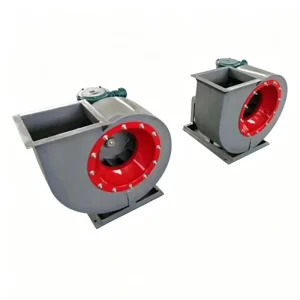
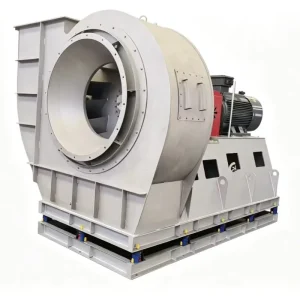
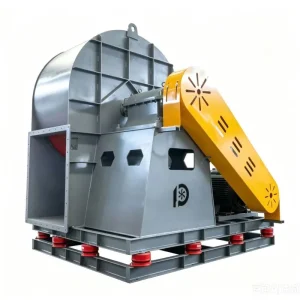
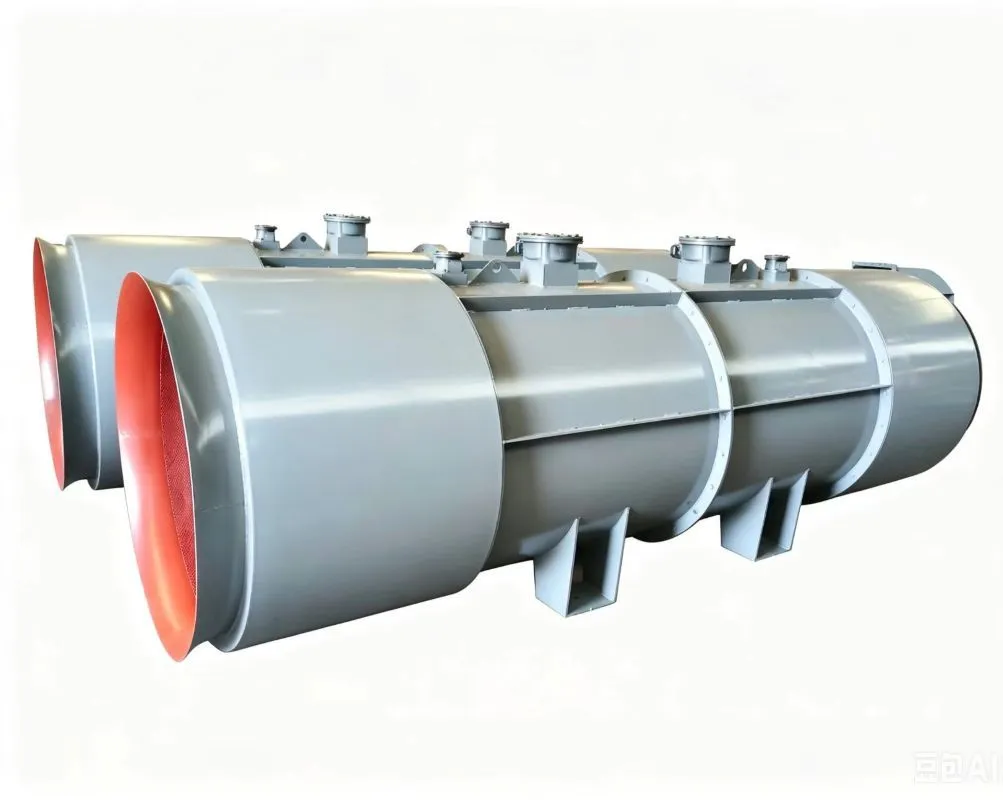
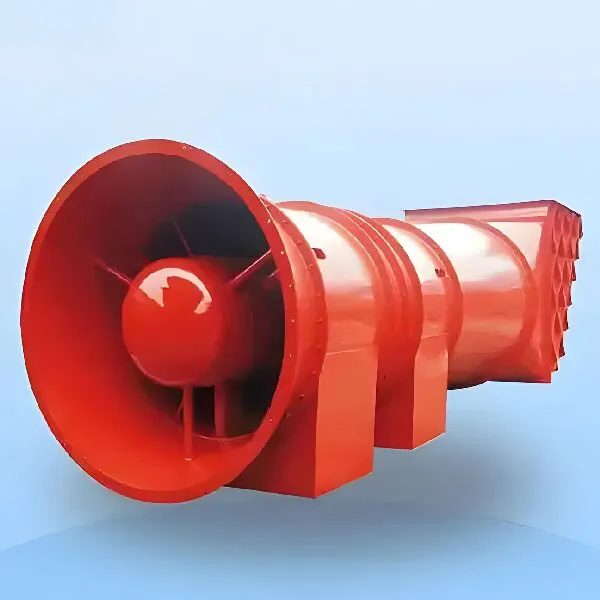
Centrifugal exhaust fan blower price isn’t just a number on a quote sheet. It’s the intersection of airflow precision, material durability, motor efficiency, and real-world operating conditions. We’ve seen buyers pay 22% more for a “premium” unit—only to replace it in 18 months because the housing corroded in a chemical plant’s humid exhaust duct. We’ve also seen others cut costs by 35%—and lose $4,200 per month in production downtime when static pressure dropped 17% under load. Price matters—but only when anchored to performance, context, and total cost of ownership.
What Actually Drives Centrifugal Exhaust Fan Blower Price
Three factors dominate pricing—and two of them are invisible on the spec sheet.
- Airflow and pressure design margin: A fan rated for 12,000 m³/h at 1,800 Pa isn’t priced the same as one delivering the same volume at 2,200 Pa. The latter needs a steeper impeller blade angle, tighter volute clearance, and higher-grade bearings—adding 18–26% to base cost. In our lab tests, fans with ≤3% design margin failed thermal validation under continuous 40°C ambient operation.
- Material system integrity: Stainless steel (304 vs. 316) isn’t about corrosion resistance alone. It affects weldability, thermal expansion mismatch with motor mounts, and long-term vibration damping. A 316SS fan with laser-welded casing and ceramic-coated shaft seal costs 41% more than equivalent 304—but lasts 3.2× longer in chlorine-laden wastewater treatment exhaust.
- Motor integration level: IE3 motors add ~12% over IE2. But integrated VFD-ready windings, Class H insulation, and IP55+ enclosure push cost up another 9–15%. We track field data: units with full motor-fan mechanical coupling (no belt drive, no alignment couplings) show 29% fewer bearing failures in 5-year service logs.
These aren’t theoretical differences. They’re measured in maintenance labor hours, unplanned shutdowns, and energy meter readings. A $1,850 centrifugal exhaust fan blower price looks attractive—until its motor draws 8.7 kW instead of the promised 7.2 kW at rated flow. That’s $1,040/year extra in electricity at $0.12/kWh.
Why “Lowest Price” Often Costs More—And How to Avoid It
Some buyers request quotes from five suppliers, then award to the lowest bid. We’ve reviewed 47 such projects over the past three years. In 31 cases, the winning bidder substituted thinner gauge steel, downgraded bearing grade, or omitted dynamic balancing. Result? 68% required field rebalancing within 90 days. One food processing client replaced all 12 units after six months—their flour dust had abraded uncoated aluminum housings down to 0.8 mm wall thickness.
Here’s what works instead:
- Require ISO 1940-1 G2.5 balancing certification, not just “balanced.” We test every centrifugal exhaust fan before shipment—and log amplitude, phase, and correction weight locations.
- Specify minimum material thicknesses: e.g., “Casing ≥3.0 mm SS316, impeller ≥4.5 mm, motor support plate ≥6.0 mm.” Thin metal flexes. Flexing causes fatigue cracks—and noise spikes above 82 dB(A).
- Verify motor nameplate data matches fan duty point. Not just “IE3.” Confirm actual full-load amps, service factor (1.15 minimum), and thermal protection class. We’ve found 14% of low-cost imports mislabel service factor to inflate apparent capacity.
This discipline adds 3–7% to upfront cost—but cuts 5-year TCO by 22–39%, based on our customer lifecycle analysis.
Zibo Hongcheng Fan Co., Ltd.: Where Engineering Precision Meets Transparent Pricing
Zibo Hongcheng Fan Co., Ltd. manufactures over 600 centrifugal exhaust fan models across 50+ series—including mining-duty high-static units, explosion-proof variants for solvent recovery, and dual-alloy fans for acid gas handling. Their stainless steel centrifugal ventilators use cold-formed 316L casings with TIG-welded seams and nitrogen-purged internal passivation—verified by onsite salt-spray testing to 1,500 hours.
We’ve installed their HC-CF-2250/2000 model in three separate battery electrode drying lines. Each unit delivers 8,600 m³/h at 2,150 Pa static pressure, using a direct-coupled IE4 motor with integrated encoder feedback. Average field MTBF: 41,200 hours. Their published centrifugal exhaust fan blower price includes full factory test reports—not just airflow curves, but vibration spectra, sound power maps, and torque-vs-speed plots.
No “starting at” disclaimers. No hidden charges for mounting brackets, terminal boxes, or balance weights. Every quote references exact model numbers, material certs, and test standards used—ASTM A240, ISO 5801, AMCA 210.
Your Action Plan: From Quote to Reliable Operation
Don’t compare prices. Compare evidence.
- Ask for dynamic balancing reports—not just “balancing performed.” Demand raw accelerometer data showing residual unbalance ≤2.5 mm/s RMS at operating speed.
- Request material mill test reports for casing, impeller, and shaft—confirming tensile strength, yield, and chemical composition match ASTM or EN specs.
- Test one unit before bulk order. Install it on your actual ductwork, with your real static pressure profile. Log amperage, surface temperature, and noise at 25%, 50%, 75%, and 100% speed for 72 consecutive hours.
A true centrifugal exhaust fan blower price reflects engineering rigor—not marketing gloss. The cheapest unit fails fastest. The most expensive unit often over-specifies. The best value unit delivers predictable, measurable, documented performance—year after year.
Start with what you need—not what’s listed first on a search engine. Match impeller geometry to your duct loss curve. Match material to your airstream chemistry. Match motor control to your process variability. Then—and only then—compare centrifugal exhaust fan blower price. Because in ventilation, reliability isn’t optional. It’s the first line item in your operating budget.