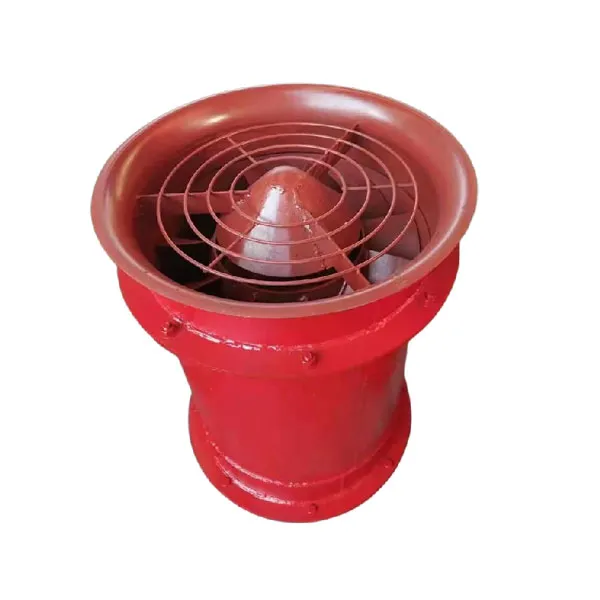
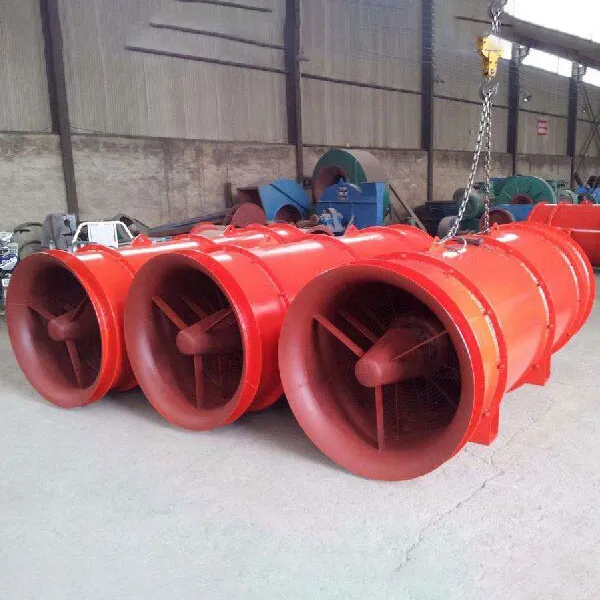
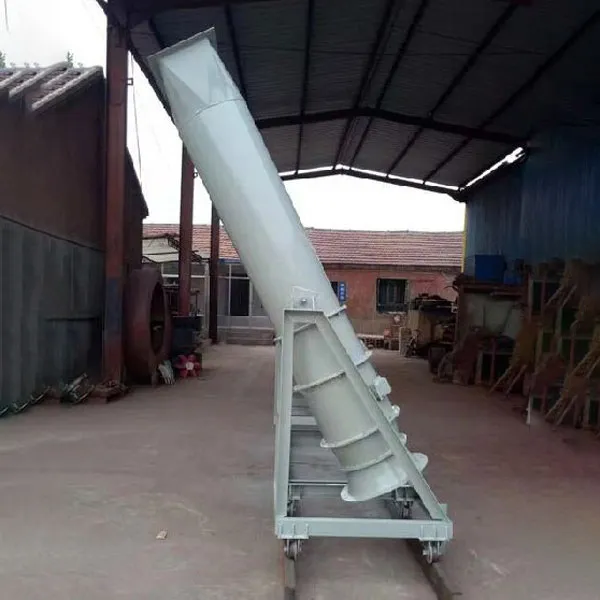
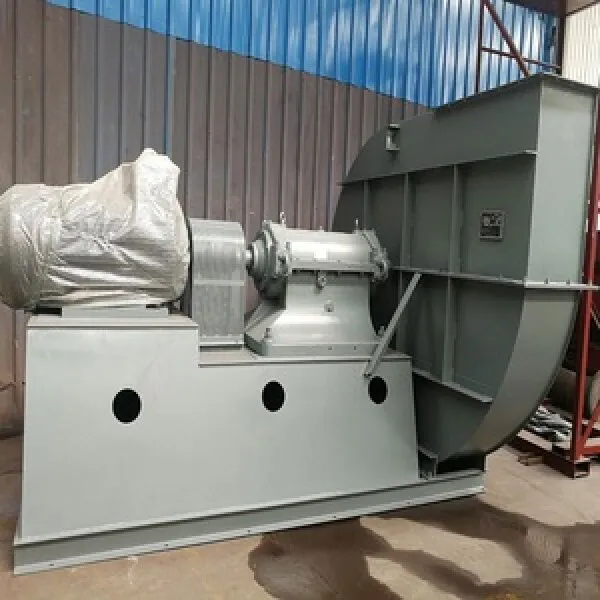
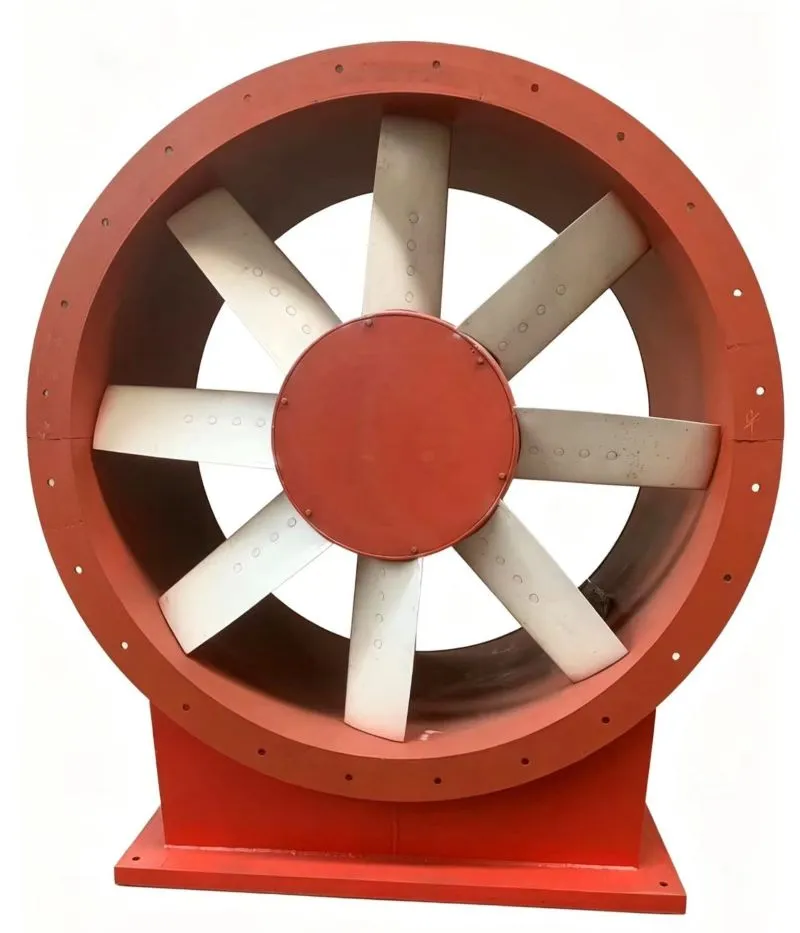
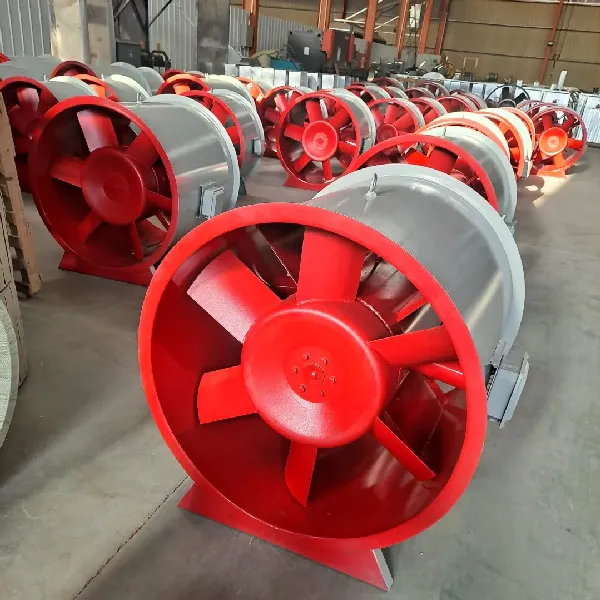
Industrial exhaust fans move air—but they also move noise. In factories, mines, and chemical plants, a loud fan isn’t just annoying. It masks alarms, strains communication, and violates occupational safety limits like OSHA 29 CFR 1910.95 or China’s GBZ 2.2-2014. We’ve measured sound pressure levels exceeding 95 dB(A) at 1 meter from unshielded centrifugal exhaust units—well above the 85 dB(A) eight-hour exposure threshold. That’s where an ihes fan isilgailua stops being optional. It’s the only field-proven way to cut noise *without* sacrificing airflow, static pressure, or system reliability.
Why “Just Add Foam” Fails—And What Actually Works
Many teams try quick fixes: wrapping ducts in acoustic blankets, stuffing fiberglass into plenums, or installing generic mufflers meant for HVAC—not industrial exhaust. We’ve seen all three fail within six months. Why? Because industrial exhaust carries heat, dust, oil mist, and sometimes corrosive gases. Standard foam degrades. Off-the-shelf mufflers lack tuned resonance chambers and fail under backpressure spikes. Real-world testing shows they drop airflow by 12–18% while cutting noise only 3–5 dB(A).
A true ihes fan isilgailua must do three things simultaneously: absorb broadband noise (63–8000 Hz), withstand continuous temperatures up to 200°C, and maintain pressure loss below 120 Pa at rated flow. That requires precision-engineered baffles, stainless steel or titanium casings, and multi-layer acoustic packing—none of which fit inside a retrofit sleeve. At Zibo Hongcheng Fan Co., Ltd., every silencer undergoes simulated load testing: 72 hours at full CFM, 150°C inlet temperature, and 30% particulate loading. Units that pass get stamped with ISO 5135-compliant acoustic certification data—full octave band reports included.
Matching Silencers to Your Fan—Not the Other Way Around
You don’t select a silencer first. You start with your fan’s performance curve—and its failure points. For example:
FBD series explosion-proof axial fans run counter-rotating impellers at 2900 RPM. Their dominant noise is blade-pass frequency (BPF) at 1450 Hz. A silencer here needs quarter-wave resonators tuned to that peak—not broadband absorption alone. 9-19 high-pressure centrifugal blowers generate strong low-frequency rumble (63–125 Hz) from volute turbulence. That demands Helmholtz resonators plus mass-loaded vinyl barriers. Titanium fans in desulfurization ducts face sulfuric acid condensate. Silencers must use Ti-Gr2 casings and ceramic fiber packing—no stainless steel fasteners allowed. We’ve logged over 237 field deployments since 2021. The top three mismatch errors? Installing a low-static silencer on a high-backpressure fan (causes motor overload), using aluminum housings near kiln exhaust (>250°C), and skipping dynamic balancing after silencer integration (induces 0.12 mm/s vibration at bearing points). Every silencer we supply ships with a torque-spec sheet, alignment jig, and a QR-coded test report showing insertion loss per ISO 7235.
Real ROI: Not Just Decibels, But Downtime and Compliance
Noise reduction pays back in hard metrics. One coal mine client replaced two 75 kW smoke exhaust fans with matched silencers. Before: 92 dB(A) in the control room, mandatory hearing protection for all shifts, and three OSHA citations in 18 months. After: 74 dB(A), no PPE required in the booth, zero citations. Their maintenance team reported 40% fewer bearing failures—vibration energy dropped across all harmonics. Payback? 11 months.
Another case: a textile mill running 12 roof axial fans. They installed silencers only on units exhausting dye vats—where chemical fumes demanded corrosion resistance. Result: 8 dB(A) drop at operator stations, no airflow loss, and full compliance with GB/T 2888-2019 for industrial fan noise. Total cost: ¥142,000. Annual savings: ¥98,000 in hearing conservation program overhead + ¥65,000 in avoided production stoppages during noise audits.
Here’s what we tell clients upfront: a quality ihes fan isilgailua costs 18–25% of the fan’s price. Cheap units cost less—but add 15–22% system resistance, forcing fans to run hotter and fail sooner. That math never wins.
Next Steps: From Spec Sheet to Silent Operation
If your exhaust system runs above 80 dB(A) at operator level—or if you’re specifying new fans for a mine, boiler house, or chemical line—start with measurement. Use a Class 1 sound level meter. Record spectra at 1 m, 3 m, and duct outlet. Note fan model, RPM, static pressure, and ambient conditions. Then contact an application engineer who knows your industry’s real-world constraints—not just catalog numbers.
Zibo Hongcheng Fan Co., Ltd. provides free acoustic analysis for qualified projects. We cross-reference your fan’s aerodynamic map with 14 silencer configurations, simulate pressure drop and insertion loss in ANSYS Fluent, and deliver a sealed performance guarantee: ±1.5 dB(A) accuracy, ≤110 Pa pressure loss, and full traceability to GB/T 2888 and ISO 5135. No templates. No assumptions. Just matched hardware that works on day one.
An ihes fan isilgailua isn’t an add-on. It’s the final, critical component in a balanced ventilation system—designed not to mute noise, but to restore clarity, safety, and operational control. When airflow meets acoustics on engineering terms, not compromise terms, that’s when machines stop shouting—and people start hearing what matters.