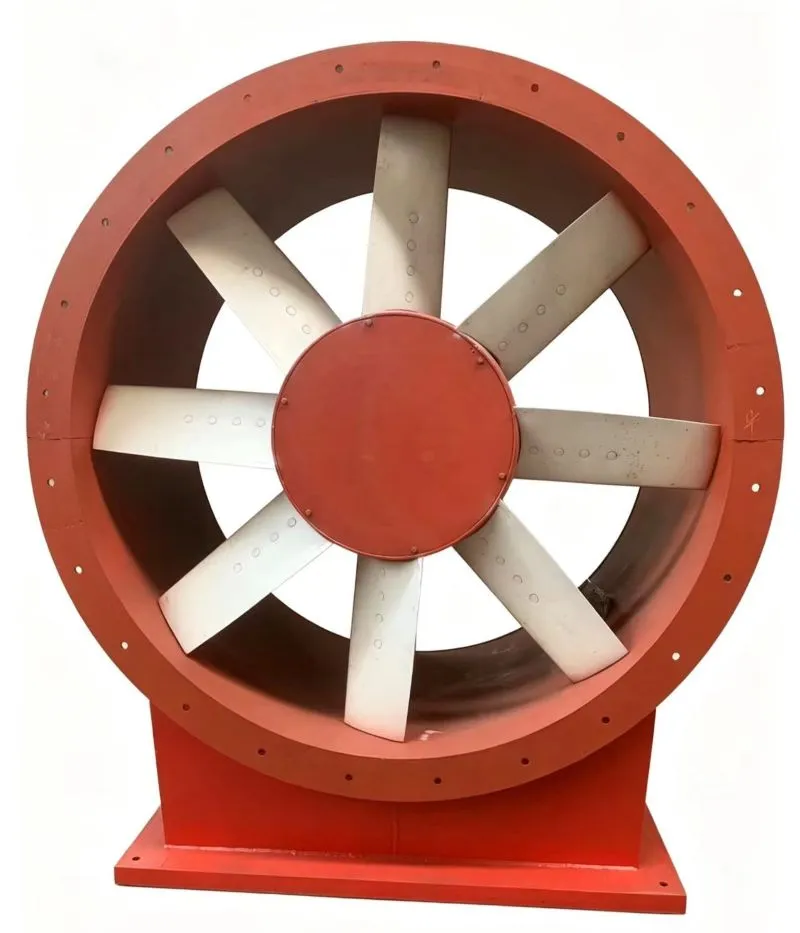
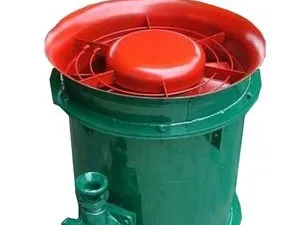
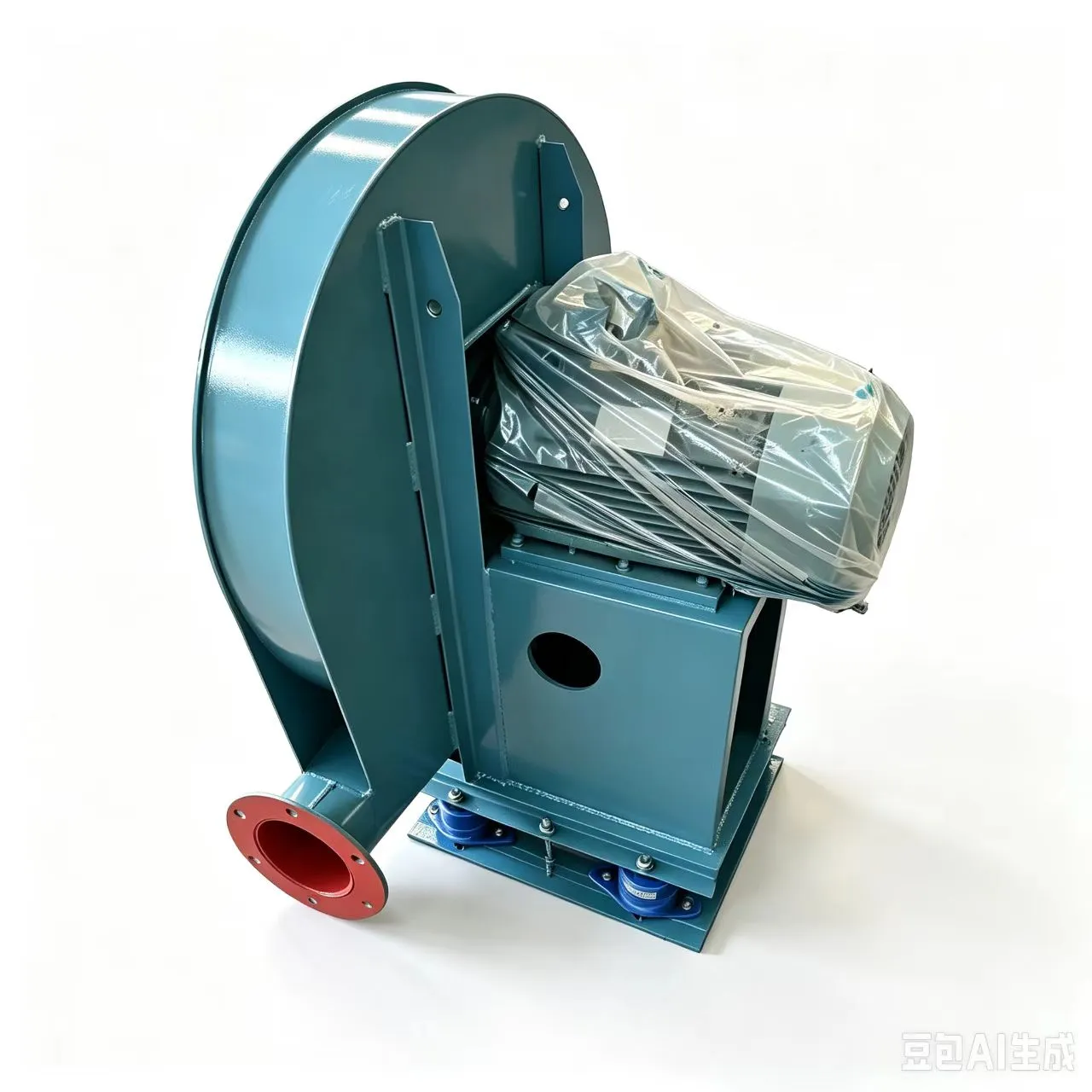
A mine counter-rotating fan is a specialized axial ventilation system featuring two impellers rotating in opposite directions. This dual-stage design eliminates the need for guide vanes, significantly improving aerodynamic efficiency and static pressure capabilities. Ideal for deep-shaft mining and long-distance tunneling, these fans provide superior airflow stability, energy savings, and compact installation footprints compared to traditional single-stage units.
What Is a Mine Counter-Rotating Fan?
In underground mining operations, ventilation is not just a regulatory requirement; it is a critical safety mechanism. A mine counter-rotating fan represents an advanced evolution in axial flow technology. Unlike conventional fans that rely on a single impeller followed by stationary guide vanes to straighten the airflow, counter-rotating models utilize two sets of blades mounted on separate motors or a complex gearbox system.
The first impeller draws air in and accelerates it, imparting both axial velocity and rotational swirl. The second impeller, rotating in the opposite direction, absorbs this residual rotational energy. By converting the swirl back into static pressure, the system achieves higher efficiency levels. This mechanical synergy allows the fan to generate greater pressure heads within a shorter physical length, making it exceptionally suitable for space-constrained mine shafts and tunnels.
Core Working Principle
The operational logic of a counter-rotating fan relies on the interaction between two contra-rotating stages:
- First Stage Impeller: Draws ambient air and accelerates it, creating a high-velocity stream with significant tangential momentum.
- Second Stage Impeller: Rotates in the reverse direction to cancel out the swirl generated by the first stage. This action recovers kinetic energy that would otherwise be lost as turbulence.
- Direct Pressure Conversion: The elimination of guide vanes reduces friction losses and structural blockage, allowing for a smoother airflow path and higher overall static efficiency.
This design is particularly effective in high-resistance ventilation networks where maintaining consistent airflow over long distances is challenging. The ability to adjust the speed or blade angle of either stage independently offers precise control over volume and pressure, adapting to changing mining conditions in real-time.
Why Choose Counter-Rotating Technology for Mining Ventilation?
Mining environments present unique engineering challenges, including high static pressure resistance, hazardous gas accumulation, and limited installation space. Traditional single-stage axial fans often struggle to meet these demands without becoming excessively large or inefficient. Counter-rotating fans address these issues through inherent design advantages.
Enhanced Aerodynamic Efficiency
One of the primary benefits of the counter-rotating configuration is its superior efficiency curve. In standard axial fans, the swirl left by the impeller represents wasted energy. By capturing and converting this energy, counter-rotating fans can achieve efficiency gains of 5% to 10% compared to equivalent single-stage models. Over the lifespan of a mining project, this translates into substantial electricity cost reductions.
Compact Structure and Space Savings
Guide vanes in traditional fans require additional axial length to effectively straighten the airflow. Removing these components allows counter-rotating fans to be significantly shorter. For mines with limited shaft diameter or tight tunnel intersections, this compact footprint simplifies installation and maintenance access. The reduced weight also lowers the structural support requirements for mounting frameworks.
Superior Pressure Generation
Deep-level mining operations often encounter high ventilation resistance due to long duct runs and complex network layouts. Counter-rotating fans excel in high-pressure scenarios. The dual-stage compression effect enables them to maintain stable airflow even when facing significant backpressure, ensuring consistent fresh air delivery to working faces.
Zibo Hongcheng Fans: Expertise in High-Efficiency OEM Solutions
When sourcing critical ventilation equipment, the manufacturer’s engineering capability and production standards are paramount. Zibo Hongcheng Fans has established itself as a reliable partner in the industrial blower sector, leveraging deep technical expertise to deliver high-performance mine counter-rotating fans.
Located within the Zibo Blower Industrial Park in Shandong Province, China, the company operates from a 9,000-square-meter facility equipped with comprehensive manufacturing and testing infrastructure. Although established in 2020, the founding team brings over 20 years of hands-on experience in the blower industry. This depth of practical knowledge ensures that every fan design is grounded in real-world engineering principles rather than theoretical models alone.
Zibo Hongcheng Fans specializes in more than 50 series and over 600 specifications of blowers, with a strong focus on mining axial flow fans, centrifugal ventilators, and corrosion-resistant units. Their product line is widely deployed in coal mines, oil fields, chemical plants, and metallurgical facilities. The company adheres to strict quality management systems, ensuring that all technical indicators meet national standards. For mining projects with specific spatial or performance constraints, the company offers customized production services, tailoring fan dimensions, materials, and motor configurations to meet personalized demands.
Key Capabilities for Mining Projects
- Custom Engineering: Ability to modify blade angles, housing materials, and motor power to match specific mine resistance curves.
- Diverse Material Options: Offering stainless steel and specialized coatings for environments with high humidity or corrosive gases.
- Rapid Prototyping: Streamlined production processes allow for quicker turnaround times on OEM orders.
- Quality Assurance: Rigorous testing protocols ensure that each unit performs reliably under continuous heavy-load conditions.
Technical Comparison: Counter-Rotating vs. Traditional Axial Fans
Understanding the differences between counter-rotating fans and traditional single-stage axial fans is crucial for making informed procurement decisions. The following table highlights key performance and structural distinctions.
| Feature |
Counter-Rotating Fan |
Traditional Single-Stage Axial Fan |
| Impeller Configuration |
Two impellers rotating in opposite directions |
Single impeller with stationary guide vanes |
| Efficiency |
Higher (recovers rotational energy) |
Standard (energy loss in swirl) |
| Static Pressure |
High capability in compact size |
Moderate; requires larger size for high pressure |
| Structural Length |
Shorter (no guide vanes needed) |
Longer (requires space for guide vanes) |
| Noise Level |
Moderate (depends on tip speed) |
Lower (guide vanes reduce turbulence noise) |
| Maintenance Complexity |
Higher (two motor/drive systems) |
Lower (single drive system) |
| Best Application |
Deep shafts, high resistance, space-limited |
Low resistance, large volume, open spaces |
While traditional fans remain suitable for low-resistance applications, the counter-rotating design offers a distinct advantage in modern, deep-level mining operations where efficiency and space are at a premium.
Application Scenarios for Mine Counter-Rotating Fans
The versatility of counter-rotating fans allows them to serve various roles within the mining ecosystem. Their robust construction and high-pressure capabilities make them indispensable in several critical areas.
Deep Shaft Ventilation
As mines extend deeper underground, the ventilation network becomes longer and more resistant. Counter-rotating fans provide the necessary static pressure to push fresh air through kilometers of ductwork and shafts. Their ability to maintain efficiency at high pressures ensures that working faces receive adequate oxygen and that hazardous gases are effectively diluted and removed.
Tunneling and Heading Faces
In tunneling operations, space is extremely limited. The compact design of counter-rotating fans allows them to be mounted directly on tunnel boring machines or in confined cross-cuts. Their high thrust output helps overcome the localized resistance created by temporary ventilation ducts and obstacles.
Emergency Smoke Extraction
In the event of a fire or explosion, rapid smoke extraction is vital for worker evacuation. Counter-rotating fans can be configured for reversible airflow, allowing them to switch direction quickly. This dual-function capability enables them to serve as both primary ventilation units and emergency smoke exhaust systems, enhancing overall mine safety protocols.
Corrosive and Harsh Environments
Mines often contain moisture, methane, and other corrosive elements. Zibo Hongcheng Fans offers models constructed with stainless steel or specialized anti-corrosion coatings. These materials protect the impellers and housing from degradation, extending the service life of the equipment and reducing maintenance frequency.
Selection Guide: How to Choose the Right Mine Fan
Selecting the appropriate mine counter-rotating fan requires a detailed analysis of the ventilation network. Engineers must consider several key parameters to ensure optimal performance and energy efficiency.
1. Airflow Volume Requirements
Determine the total volume of air required to dilute gases, cool the workspace, and support combustion engines if used. This is typically measured in cubic meters per second (m³/s). The fan must be capable of delivering this volume against the expected system resistance.
2. Static Pressure Resistance
Calculate the total pressure loss in the ventilation network, including friction losses in ducts, shocks at bends, and natural ventilation pressures. Counter-rotating fans are ideal for systems with high static pressure requirements. Ensure the selected model’s pressure curve intersects the system resistance curve at the desired operating point.
3. Installation Space Constraints
Assess the available physical space for fan installation. If shaft diameter or tunnel height is limited, the compact nature of counter-rotating fans provides a significant advantage. Verify clearance requirements for maintenance access around the dual-motor setup.
4. Environmental Conditions
Consider the ambient temperature, humidity, and presence of corrosive gases. For wet or chemically aggressive environments, select fans with appropriate material specifications, such as stainless steel impellers or epoxy-coated housings. Zibo Hongcheng Fans provides customized material solutions to match these environmental challenges.
5. Energy Efficiency and Control
Evaluate the fan’s efficiency curve across its operating range. Look for models equipped with variable frequency drives (VFDs) or adjustable blade pitch mechanisms. These features allow the fan to adapt to changing ventilation needs, reducing energy consumption during partial load conditions.
Installation and Maintenance Best Practices
Proper installation and regular maintenance are essential to maximize the lifespan and performance of mine counter-rotating fans. Given the complexity of the dual-impeller system, adherence to best practices is critical.
Installation Guidelines
- Foundation Stability: Ensure the mounting foundation is rigid and level to prevent vibration transmission. Misalignment can lead to premature bearing failure.
- Electrical Connection: Verify that the phase sequence for both motors is correct to ensure true counter-rotation. Incorrect wiring can cause the impellers to rotate in the same direction, leading to catastrophic failure.
- Inlet and Outlet Clearance: Maintain sufficient clearance at the inlet and outlet to avoid airflow distortion. Avoid placing obstructions within one fan diameter of the intake.
Maintenance Routine
- Vibration Monitoring: Regularly monitor vibration levels. Increased vibration may indicate imbalance, misalignment, or bearing wear.
- Bearing Lubrication: Follow the manufacturer’s lubrication schedule for both motor bearings. Use high-quality grease suitable for high-temperature and high-load applications.
- Blade Inspection: Periodically inspect impeller blades for signs of erosion, corrosion, or debris accumulation. Clean blades regularly to maintain aerodynamic efficiency.
- Motor Temperature: Monitor motor winding temperatures. Overheating can indicate overload or cooling system issues.
Frequently Asked Questions (FAQ)
How does a counter-rotating fan improve energy efficiency?
By using a second impeller to recover the rotational energy (swirl) created by the first impeller, counter-rotating fans convert kinetic energy into static pressure more effectively. This reduces energy waste and improves overall system efficiency by 5-10% compared to traditional designs.
Are counter-rotating fans noisier than standard axial fans?
Counter-rotating fans can generate higher noise levels due to the interaction between the two impeller streams. However, proper blade design, optimized tip speeds, and acoustic lining in the ductwork can mitigate noise. In many mining applications, performance and pressure capabilities take precedence over noise considerations.
Can Zibo Hongcheng Fans customize fan sizes for specific mines?
Yes. Zibo Hongcheng Fans offers customized production services. With over 600 specifications and a flexible manufacturing process, they can tailor fan dimensions, motor power, and materials to meet the specific geometric and performance requirements of individual mining projects.
What maintenance is required for the dual-motor system?
Maintenance focuses on monitoring the synchronization of the two motors, ensuring correct counter-rotation, and maintaining bearing lubrication. Regular vibration analysis and thermal imaging help detect early signs of motor or bearing issues, preventing unexpected downtime.
Is a counter-rotating fan suitable for low-pressure applications?
While technically feasible, counter-rotating fans are optimized for medium to high-pressure applications. For low-resistance systems requiring large volumes of air, a traditional single-stage axial fan or a centrifugal fan may be more cost-effective and simpler to maintain.
Conclusion: Optimizing Mine Safety and Efficiency
The selection of ventilation equipment is a strategic decision that impacts both operational safety and long-term costs. Mine counter-rotating fans offer a compelling solution for modern mining operations, delivering high static pressure, improved energy efficiency, and a compact footprint. Their ability to thrive in high-resistance environments makes them indispensable for deep-shaft and complex tunneling projects.
Partnering with an experienced manufacturer ensures that these technical advantages are realized in practice. Zibo Hongcheng Fans combines two decades of industry expertise with advanced manufacturing capabilities to deliver reliable, customized ventilation solutions. From initial design consultation to final production, their commitment to quality and precision supports the demanding needs of the global mining sector.
For mining engineers and procurement specialists seeking to upgrade their ventilation infrastructure, evaluating counter-rotating technology is a critical step. By focusing on aerodynamic efficiency and robust construction, these fans provide a sustainable path toward safer and more productive mining operations.
To explore specific models, request technical data sheets, or discuss customized OEM solutions for your project, contact our engineering team today. Let us help you design a ventilation system that meets your exact pressure and volume requirements.
View Related Mining Fan Products & Technical Solutions