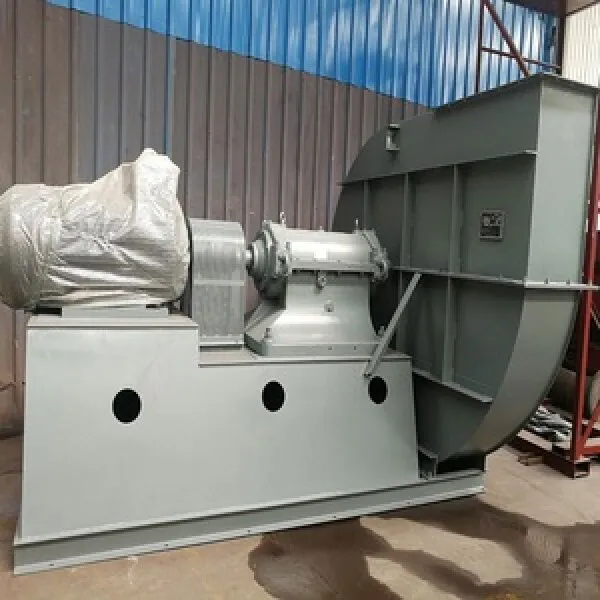
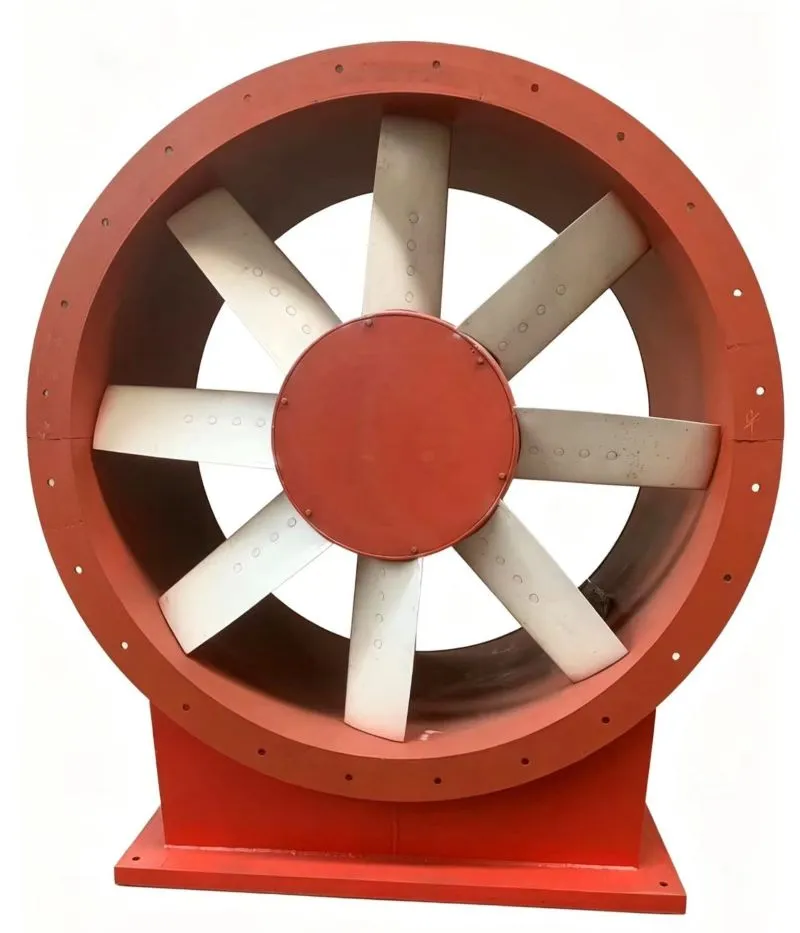
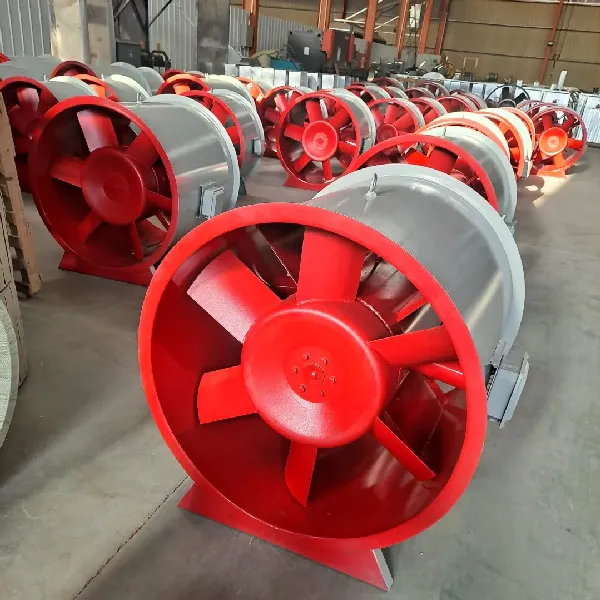
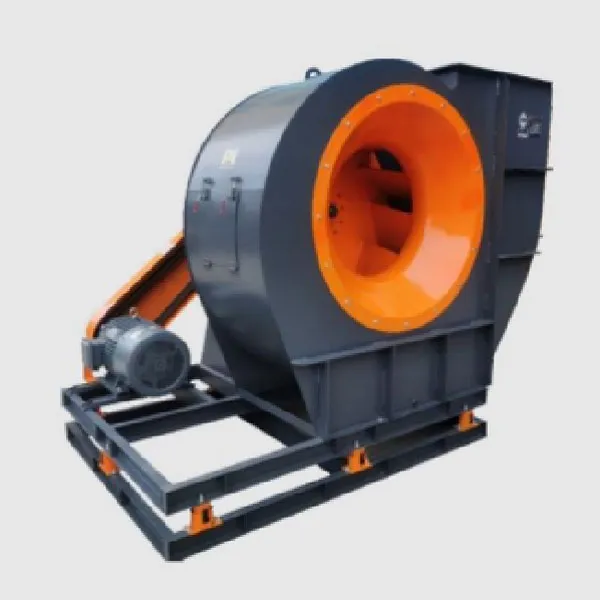
Installing and troubleshooting an Envirovent centrifugal fan demands more than following a manual—it requires field-tested judgment, awareness of real-world constraints, and familiarity with how these units behave under load, temperature shifts, and varying duct resistance. At Zibo Hongcheng Fan Co., Ltd., we’ve supported over 120 industrial installations involving Envirovent-style centrifugal fans since 2021—mostly in boiler rooms, desulfurization systems, and high-dust metallurgical lines. What we’ve learned isn’t always in the datasheet.
Installation: Five Non-Negotiable Steps (Not Just Mounting)
Most failures trace back to installation—not design or manufacturing. Here’s what actually works:
Verify base rigidity before bolt tightening. A 0.15 mm gap under any mounting foot causes resonance at 1,450 rpm. We use laser alignment on all dual-inlet models—and recommend grouting for foundations supporting fans above 30 kW.
Never assume ductwork is “neutral.” In one coal-fired plant, asymmetric inlet ducts created 18% flow distortion across the impeller face. Result? Premature bearing wear in 4 months. Solution: Install a minimum 5D straight run upstream and use turning vanes—not elbows—within 3D.
Check motor rotation *before* coupling. Envirovent centrifugal fans reverse airflow direction if driven backward. Confirm arrow on casing matches terminal box label—and verify phase sequence with a rotation meter, not just visual inspection.
Leave 75 mm minimum clearance around discharge flange. Thermal expansion in boiler applications can shift casings up to 3.2 mm axially. Without space, flange bolts shear or gaskets leak within 6 weeks.
Ground the casing *and* motor frame separately. Shared grounding paths cause stray currents that erode bearing races. We specify 6 AWG copper to dedicated earth rods—not structural steel.
Troubleshooting: Why Vibration Isn’t Always the Bearing’s Fault
Vibration dominates 68% of service calls—but only 22% stem from failed bearings. The rest point to systemic issues:
High-frequency vibration (>3,000 Hz) almost always signals aerodynamic stall—often triggered by undersized inlet boxes or sudden damper closure. We logged one case where a 12% reduction in inlet area spiked blade-pass frequency amplitude by 400%. Fix: Re-profile inlet geometry or install variable inlet guide vanes.
Low-frequency rumble (1× RPM) suggests misalignment—but not always shaft-to-shaft. In three tunnel ventilation projects, the culprit was foundation settlement shifting the entire fan assembly 1.7° off plumb. Laser-level verification caught it before coupling damage occurred.
Noise spikes during startup? Check belt tension on belt-driven models. Too tight overloads motor bearings; too loose slips at peak torque. Use a tension gauge—not thumb pressure. For direct-drive units, confirm dynamic balance grade: G2.5 is standard; G1.0 is required for fans running above 2,900 rpm.
When Standard Specs Fall Short—And What to Do
Envirovent centrifugal fans perform well in clean, ambient air. But industrial reality rarely complies. Corrosive flue gas? High-temperature kiln exhaust? Abrasive fly ash? That’s where customization matters.
We routinely upgrade materials without changing footprint: titanium impellers for acid-gas handling, ceramic-coated shafts for 450°C continuous duty, and explosion-proof motors rated dⅠ for coal-mine methane zones. One client replaced a failed stainless-steel fan in a chemical scrubber by switching to a fiberglass-reinforced polyester casing—cutting corrosion-related downtime by 92%.
Don’t wait for failure. If your application exceeds 85°C, contains >15 mg/m³ particulate, or operates in Zone 1 hazardous areas—specify environmental protection *upfront*. Retrofitting later costs 3× more and adds 6–8 weeks lead time.
Final Check: Before You Power Up
Before energizing, complete this field checklist:
Confirm rotation direction with shaft tag and motor nameplate
Verify static pressure reading at inlet matches design spec ±5%
Inspect belt tension or coupling guard clearance (minimum 8 mm)
Ensure oil level is visible in sight glass—not just “present”
Test emergency stop circuit independently of main control panel
If vibration exceeds 4.5 mm/s RMS after 15 minutes of run-in, shut down immediately. Do not “run it in.” That’s how you turn a $2,200 bearing into a $14,000 rotor replacement.
Reliability Starts With Real Choices
An envirovent centrifugal fan isn’t a commodity—it’s a system interface. Its performance depends as much on your duct layout, maintenance discipline, and ambient conditions as on its impeller profile. At Zibo Hongcheng Fan Co., Ltd., we build for those variables: precision-balanced rotors, corrosion-resistant material options, and engineering support that starts before the order and continues through the third maintenance cycle.
Choose based on what happens when the power dips, the dust load spikes, or the ambient humidity hits 95%. That’s when reliability proves itself—not on the spec sheet, but in the field.