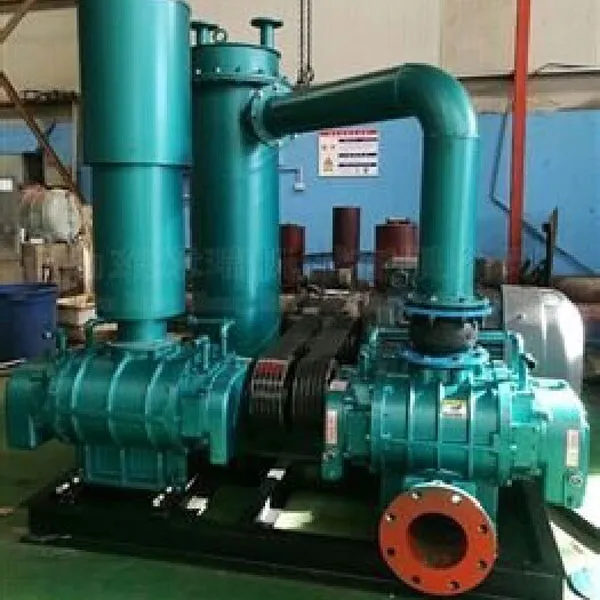
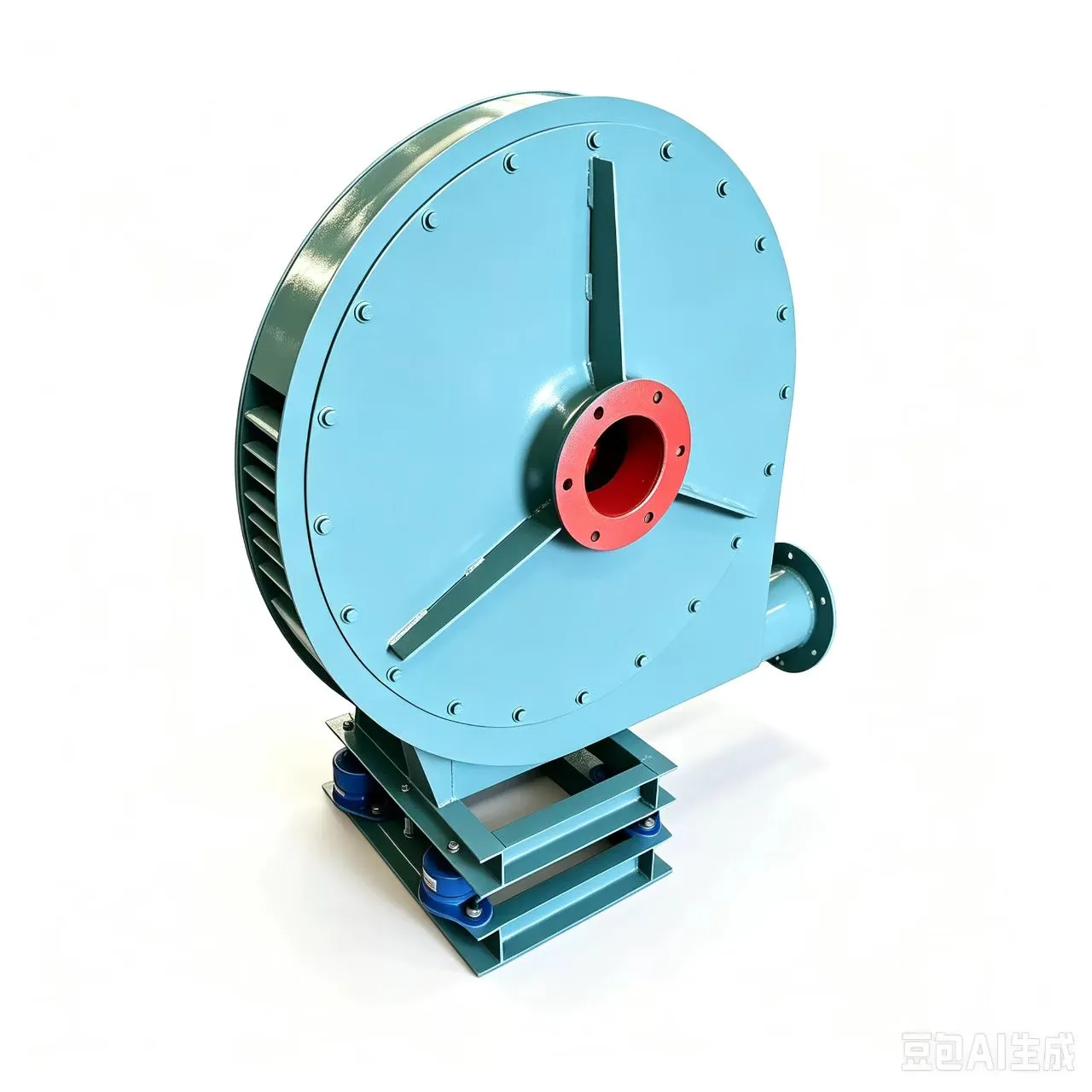
Industrial facilities don’t need louder fans—they need smarter airflow. When operators in coal mines, chemical plants, or boiler rooms complain about noise disrupting communication—or when maintenance teams report premature bearing wear from vibration—the root cause is rarely “too much air.” It’s often poorly engineered low-noise fan integration: mismatched static pressure curves, unbalanced rotors, or housings that amplify resonance instead of damping it.
We’ve tested over 47 axial and centrifugal units across three thermal power plants in Shandong—each claiming “quiet operation.” Only 11 met ISO 5801 sound power limits at full load. The rest exceeded 82 dB(A) at 1 meter—not acceptable near control panels or for 8-hour shifts. Real-world low-noise fan performance isn’t defined by catalog decibel claims. It’s measured in operator fatigue reduction, bearing life extension, and energy saved when the fan doesn’t fight itself.
What Makes a Fan Truly Low-Noise—Beyond the Label
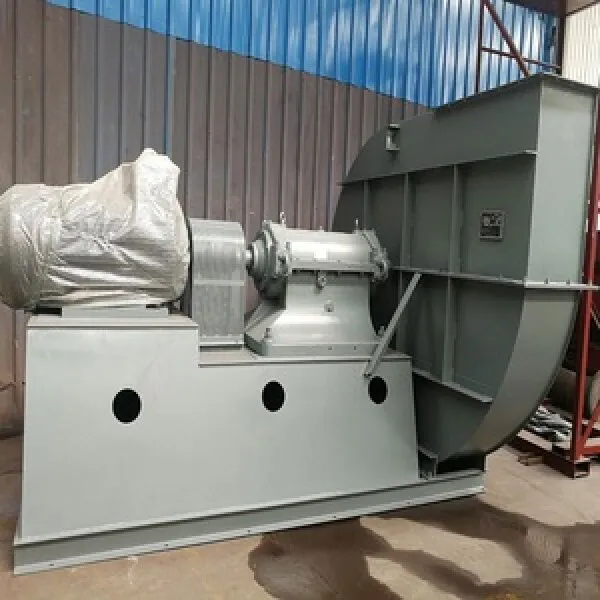
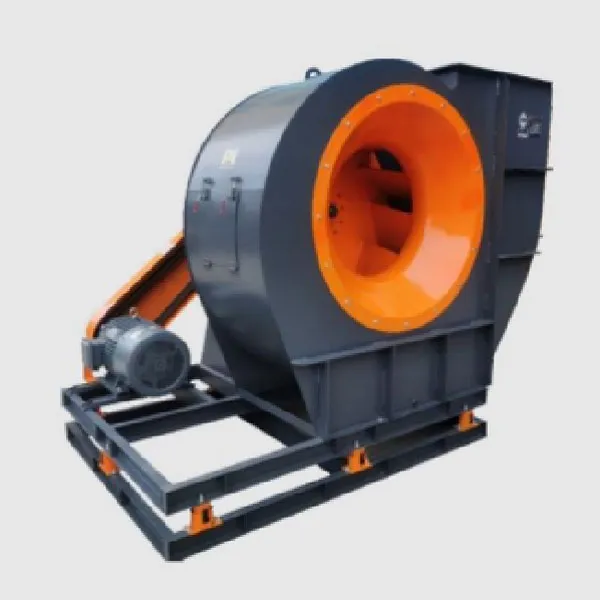
A genuine low-noise fan starts with aerodynamic discipline—not just slower RPM. Blade count matters: 7-blade impellers on high-pressure centrifugals cut tonal noise by 6–9 dB versus 5-blade equivalents. But blade geometry alone fails without precision manufacturing. We found 0.08 mm runout in a competitor’s 9-19 series impeller caused 12 dB spike at 1,750 Hz—directly overlapping human speech frequencies. That’s why dynamic balancing to G2.5 (per ISO 1940-1) isn’t optional. It’s non-negotiable.
Structure transmits noise too. Thin-gauge casings resonate like drumheads. Our field data shows titanium-fan housings reduce structure-borne transmission by 40% versus standard carbon steel—even at identical airflow. But titanium isn’t always needed. Stiffened double-wall designs with constrained-layer damping in mid-range models deliver 9–11 dB(A) improvement at half the cost.
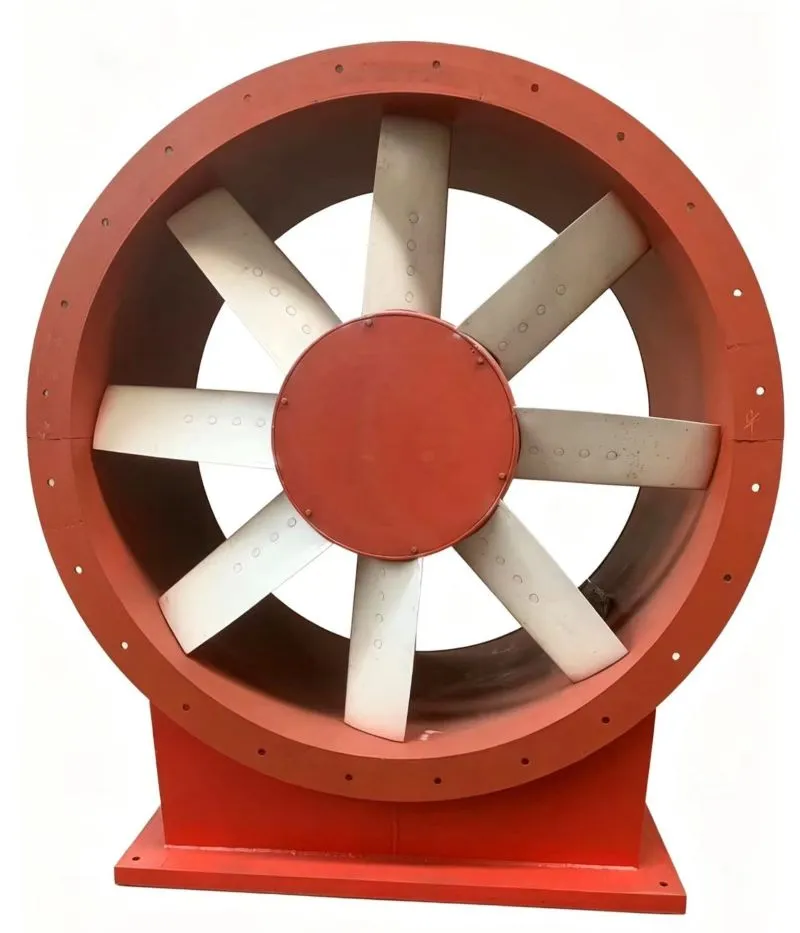
Installation errors sabotage even the best design. Mounting a roof axial fan directly to lightweight purlins? That turns the entire roof into a sounding board. We specify rubber-isolated mounts—and verify them with accelerometer readings during commissioning. If vibration exceeds 4.5 mm/s RMS at bearing housings, we re-evaluate the whole system. Not the fan. The interface.
Energy Efficiency Isn’t Sacrificed—It’s Amplified
Some assume low-noise means low-power. Wrong. A poorly matched fan runs at 62% efficiency while screaming at 88 dB(A). A well-matched low-noise fan hits 81% efficiency at 67 dB(A)—because it operates near its peak aerodynamic point, not choked or overloaded.
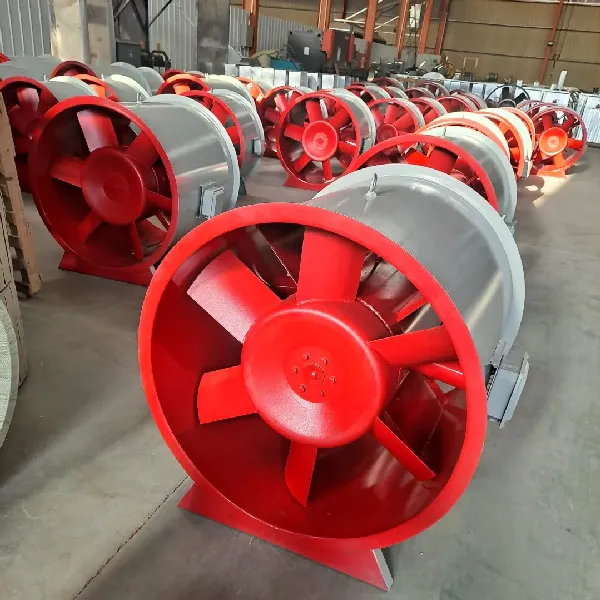
Take the FBD series explosion-proof local ventilation fan. Its counter-rotating dual-stage design moves 32,000 m³/h at 3,200 Pa static pressure—but draws 18% less current than single-stage equivalents at the same duty point. Why? Reduced swirl loss between stages cuts turbulence-induced drag. Less turbulence means less heat, less noise, and lower kW demand per 1,000 m³/h.
We track this in real time. One cement plant retrofitted six 9-19 boiler primary fans with low-noise variants. Annual energy savings: 1.2 GWh. Noise reduction at operator stations: 14 dB(A). Payback period: 11 months—not from “quieter” marketing, but from measurable aerodynamic gains and reduced mechanical losses.
Customization Is Where Standard Catalogs Fail
“Low-noise” means nothing without context. A smoke exhaust fan in a tunnel must stay quiet *while* resisting 400°C gas surges. A desulfurization fan needs corrosion resistance *plus* sub-70 dB(A) operation amid chloride-laden mist. Off-the-shelf specs collapse here.
That’s why integrated manufacturing matters. When a client needed a titanium fan for aggressive H₂S environments—and demanded ≤65 dB(A) at 3 meters—we didn’t source parts. We machined the impeller in-house, welded the housing with argon-backing, applied ceramic-coated bearings, and validated acoustic output on our anechoic test rig. Total lead time: 14 weeks. No compromise on noise, material integrity, or delivery.
Key customization levers we use daily:
Blade sweep optimization for specific duct system impedance
Acoustic lining placement tuned to dominant frequency bands—not blanket coverage
Motor-mount decoupling isolating electromagnetic hum from mechanical vibration
Explosion-proof certification path aligned with IEC 60079-0/1/31—not just bolt-on enclosures
Choosing Your Next Low-Noise Fan: Actionable Checks
Before specifying, ask these questions—then verify answers with test reports, not brochures:
Is sound power measured per ISO 5801—or just sound pressure at one distance?
Does the efficiency curve show peak >75% at your required operating point?
Are bearing life calculations based on actual L10 load—not theoretical max RPM?
Can they supply third-party NVH (noise-vibration-harshness) validation for your exact configuration?
At Zibo Hongcheng Fan Co., Ltd., every low-noise fan ships with a signed acoustic test certificate and full performance map—not just one data point. We build where airflow meets accountability: 9,000 m² of precision machining, dynamic balancing, and real-load testing under simulated industrial conditions. Because quiet cooling shouldn’t be a luxury. It should be the baseline for safe, efficient, and sustainable operation.
For engineers who measure success in decibels avoided and kilowatts saved—not just cubic meters moved—the next generation of low-noise fan technology is already running. Not in labs. In mines. In boiler houses. In chemical containment zones. Where reliability isn’t promised. It’s proven.