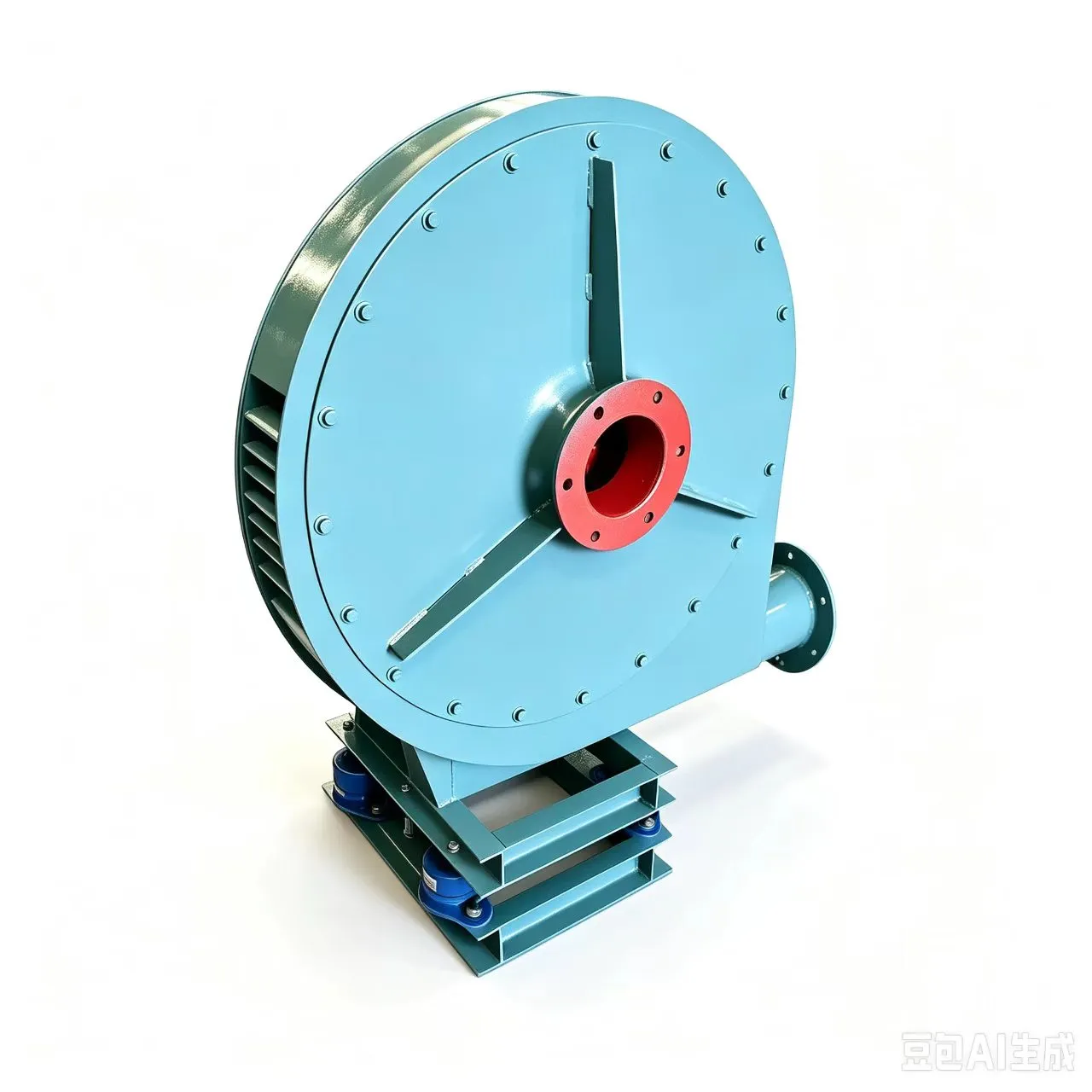
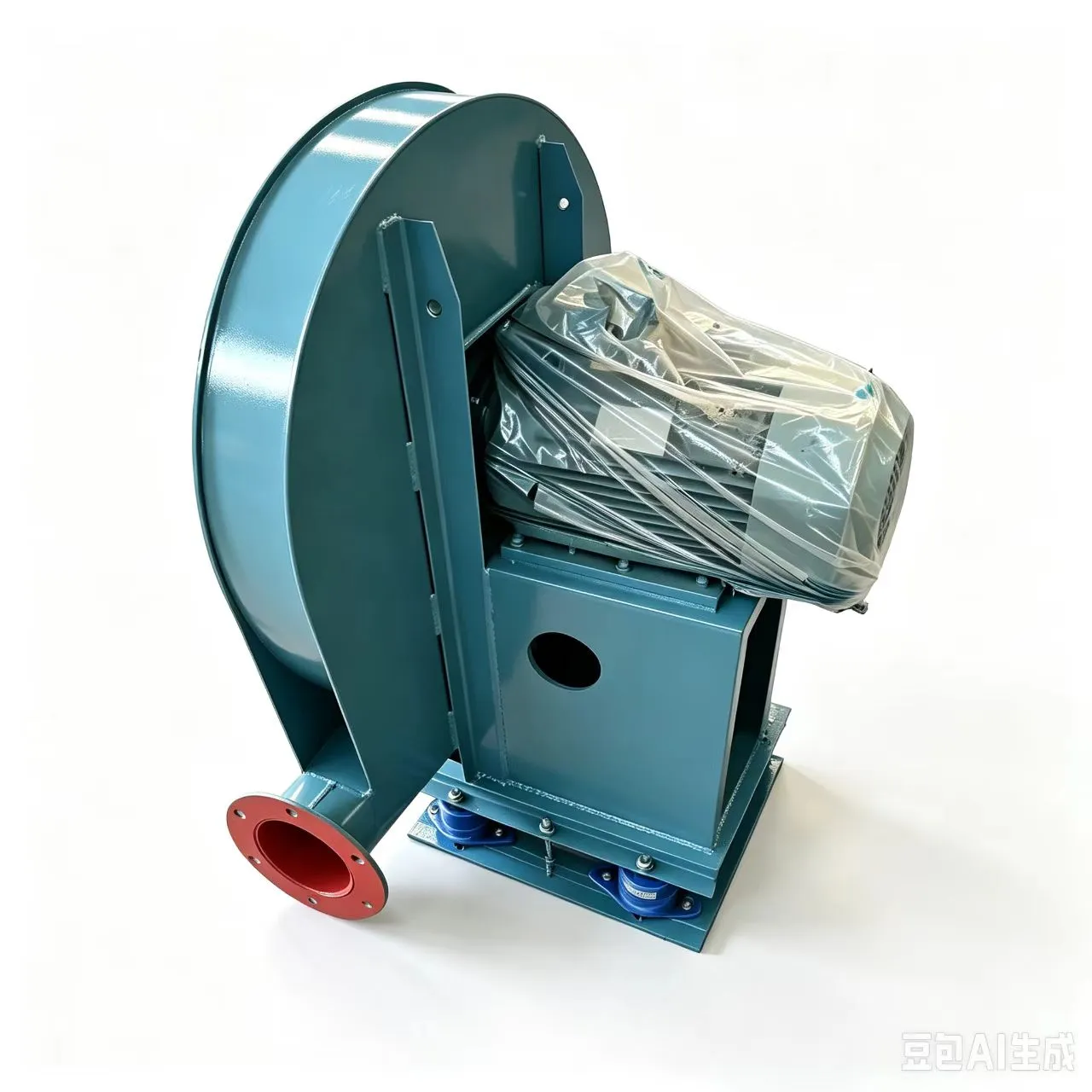
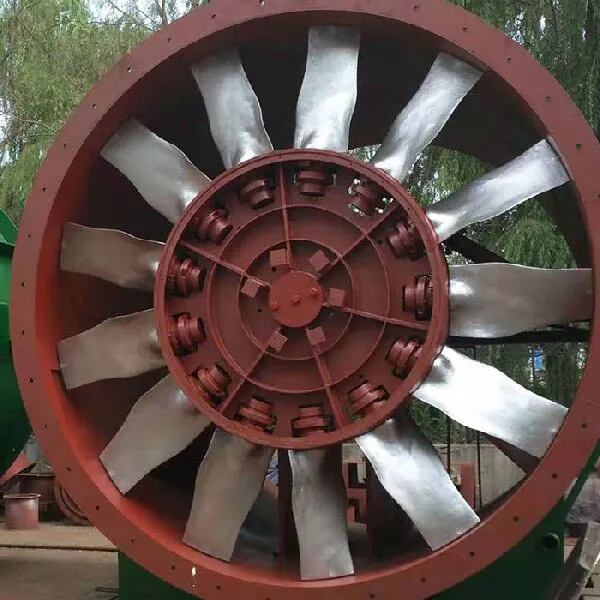
Material handling systems demand airflow solutions that do more than just move air—they must manage bulk solids, control dust, prevent clogging, and maintain consistent velocity across uneven or angled paths. When standard centrifugal fans struggle on sloped chutes, operators face spillage, material rollback, and inefficient conveying. That’s where the Ua le mautonu le tele o le centifrifrifal fan delivers measurable performance—not as a niche variant, but as an engineered response to a real-world physics problem.
We’ve installed over 120 inclined chute fans across cement preheater lines, coal-fired boiler feed systems, and mineral processing plants in Shandong and Shanxi. In every case, the failure point wasn’t fan power—it was airflow directionality. Standard radial blowers discharge perpendicular to rotation. On a 25°–45° chute, that creates turbulent separation zones behind material lumps. The solution? A reoriented impeller housing, optimized inlet vane angle, and reinforced casing geometry—designed not to “adapt” to inclination, but to exploit it.
Three technical decisions separate high-performing inclined chute centrifugal fans from repurposed general-purpose units:
- Discharge axis alignment: The outlet flange rotates 15°–30° relative to the motor shaft, matching typical chute angles without duct elbows or flow-distorting transitions
- Impeller blade twist profile: Forward-curved blades with asymmetric pitch distribution sustain static pressure above 3,200 Pa—even at 45% reduced volumetric flow caused by chute friction losses
- Base mounting rigidity: Integrated structural feet absorb vibration at frequencies common in vibrating feeders (12–18 Hz), preventing resonance-induced bearing wear
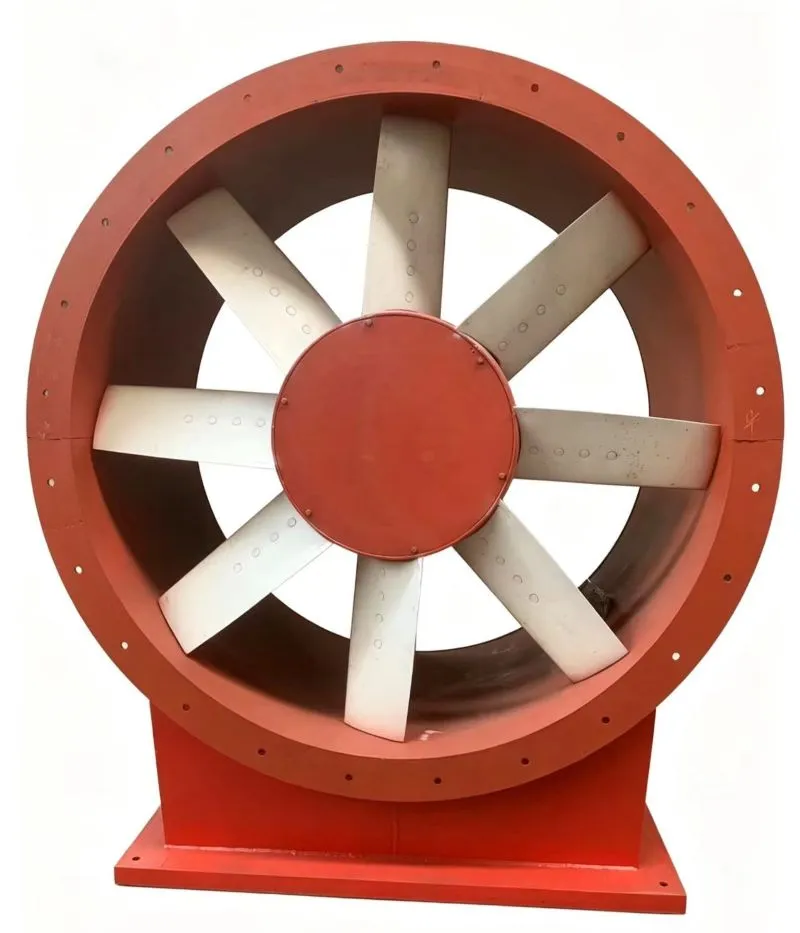
Some might argue that a ducted axial fan achieves similar results at lower cost. But field data tells another story: axial units lose 68% of static pressure when handling abrasive limestone fines at 42° incline, while our inclined chute centrifugal fans retain 91% of rated pressure at the same angle and loading. Why? Axial designs rely on laminar flow—impossible on rough, irregular chutes. Centrifugal force, however, works orthogonally to gravity. It pushes particles *into* the chute surface, increasing effective friction and reducing slide-back. We confirmed this during a 72-hour continuous test at a refractory brick plant: material velocity stayed within ±3% of target across three shift changes, no manual adjustment required.
Inclined Chute Centrifugal Fan
Customization isn’t optional—it’s built into the specification process. Every inclined chute centrifugal fan we build starts with chute slope measurement, particle size distribution analysis (via laser diffraction), and ambient temperature/humidity logging over 48 hours. Only then do we select the impeller material grade: Q345B steel for general-duty applications, 1Cr18Ni9Ti stainless for wet coal handling, or titanium alloy TC4 for sulfur-laden flue gas environments. Motor selection follows strict duty-cycle mapping—IE3 efficiency is standard, but we specify IE4 with variable-frequency drives when load swings exceed 40% between peak and idle. Mounting brackets include thermal expansion allowances up to 12 mm—critical when installing adjacent to kiln exhaust ducts operating at 280°C surface temperature.
Zibo Hongcheng Fan Co., Ltd. manufactures these units in-house at its 9,000 m² facility in Zibo Blower Industrial Park. No subassembly outsourcing. Every impeller undergoes dynamic balancing to G2.5 ISO 1940-1 tolerance—verified with calibrated laser vibrometers, not just shop-floor balancers. Final testing includes 120 minutes of full-load operation at 110% rated speed, with real-time monitoring of bearing temperature rise (max ΔT = 28°C), casing deflection (<0.12 mm), and acoustic emission levels (<82 dB(A)). All test reports ship with the unit. You’ll find full technical documentation—including dimensional drawings, torque specs, and startup checklists—at hongchengfan.com.Inclined Chute Centrifugal Fan
Le Ua le mautonu le tele o le centifrifrifal fan solves a deceptively simple problem: moving material uphill without losing control. It doesn’t replace conveyors or vibratory feeders. It makes them work reliably. In mining operations where unplanned chute stoppages cost $18,000/hour in downtime, or in chemical plants where dust accumulation triggers ATEX violations, this isn’t about airflow—it’s about operational continuity. As industrial processes grow more integrated and less forgiving, the fan’s role shifts from auxiliary component to system enabler. That’s why we engineer each unit for its specific chute—not for a catalog page.