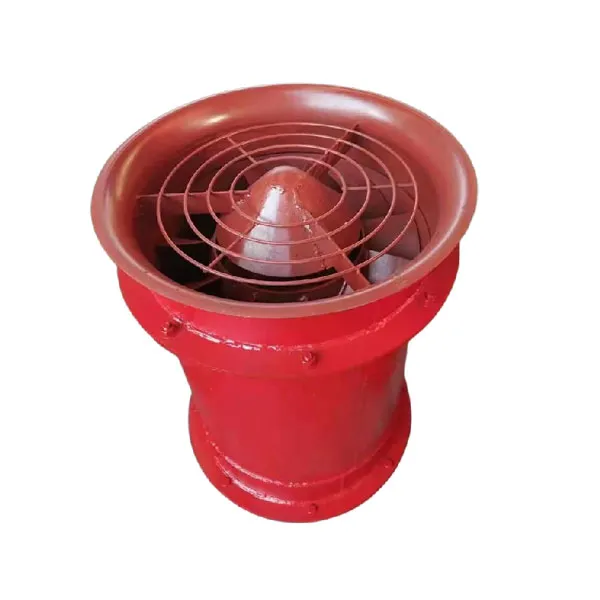
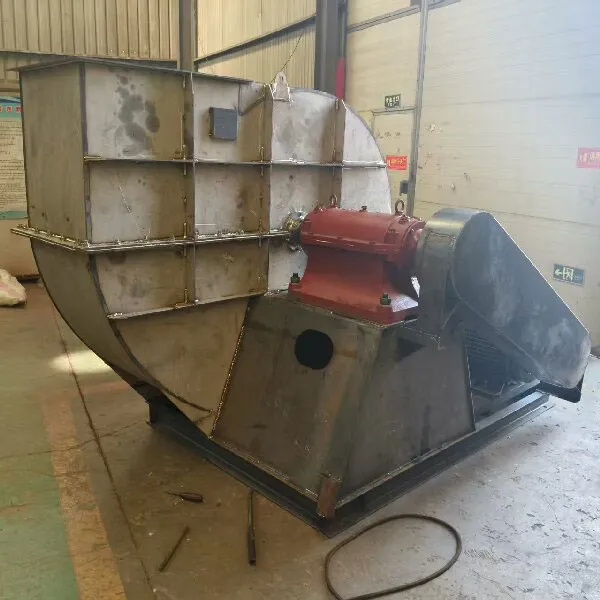
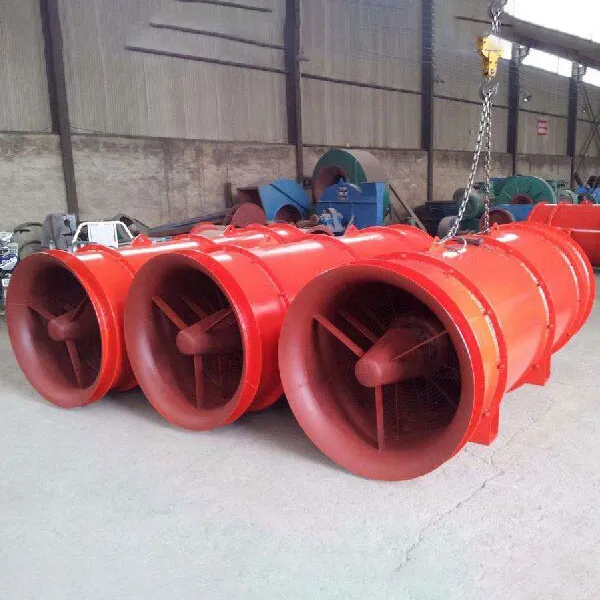
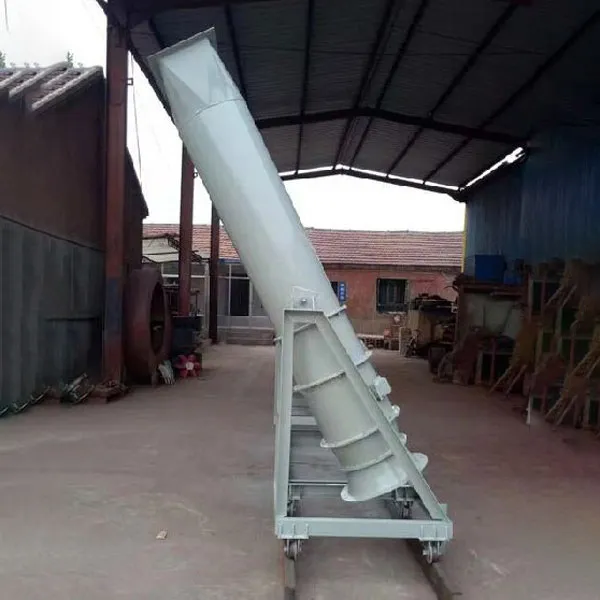
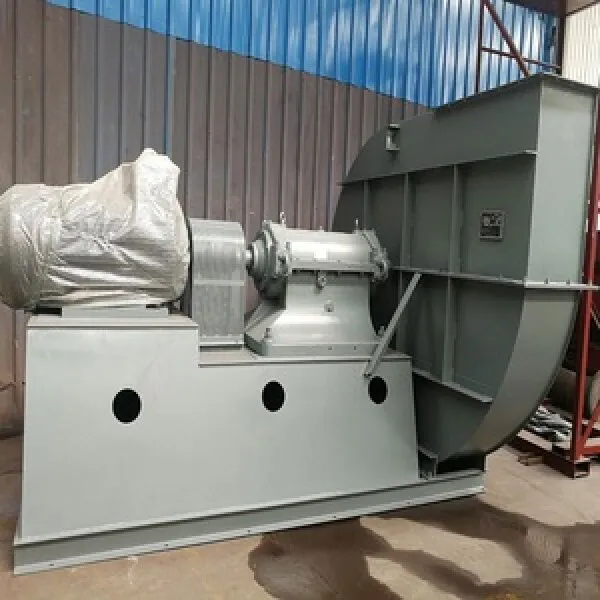
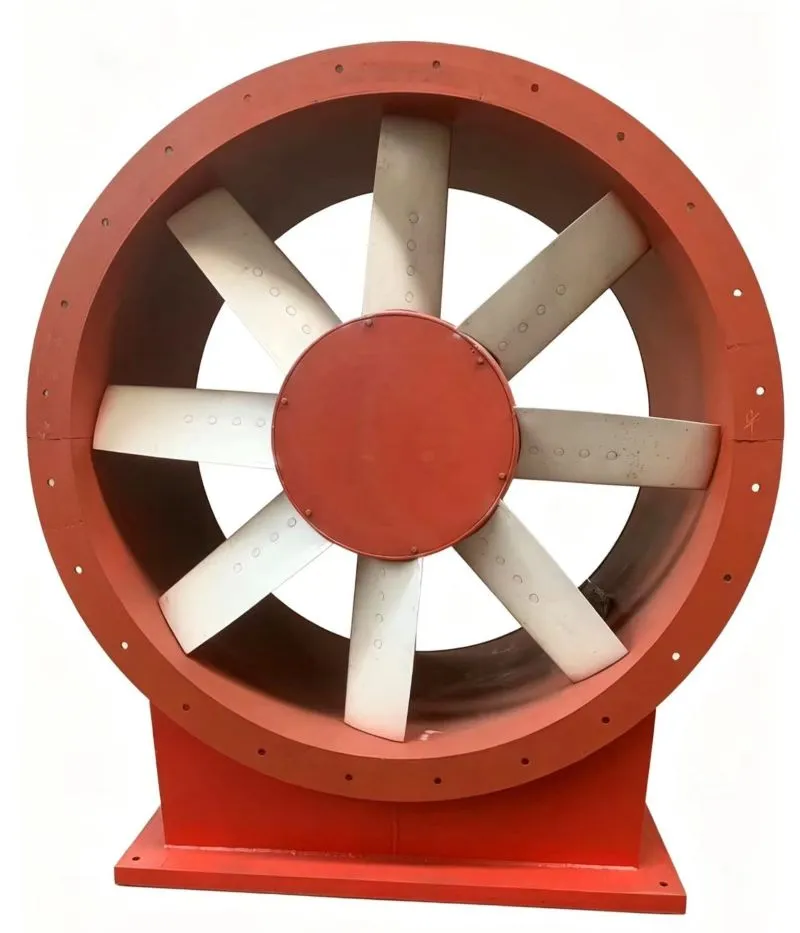
When industrial cooling demands pressure—not just airflow—a 4 inch centrifugal fan becomes the unsung workhorse behind stable thermal management. We’ve seen them fail in boiler preheater ducts where backpressure spiked unexpectedly. We’ve also seen them run flawlessly for 42 months straight in chemical fume extraction—provided the impeller material matched the vapor load. That narrow margin between success and shutdown is where engineering discipline matters most.
Why 4 Inch Centrifugal Fans Excel Where Axial Units Struggle
Axial fans move air efficiently—but only when resistance stays low. Add a filter bank, a long duct run, or a heat exchanger coil, and static pressure climbs. At 150–300 Pa, many axial units stall or drop 40% of rated flow. A well-designed 4 inch centrifugal fan, however, maintains >85% of its free-air volume even at 600 Pa. Why? Curved backward-swept blades convert rotational energy into pressure more effectively. The compact 102 mm diameter isn’t a compromise—it’s an optimization for space-constrained enclosures, control panels, and modular HVAC skids.
We tested three common 4-inch models side-by-side under simulated kiln exhaust conditions: temperature 180°C, particulate loading 8 mg/m³, and system resistance 520 Pa. Only the double-width forward-curved centrifugal unit held steady airflow within ±3%. Its aluminum die-cast impeller resisted warping; its sealed ball bearings stayed lubricated. The others showed measurable vibration growth after 72 hours—and one failed bearing seals at hour 98. Real-world reliability starts with mechanical fit, not just datasheet claims.
Four Non-Negotiable Selection Criteria (Backed by Field Data)
Choosing the wrong 4 inch centrifugal fan wastes energy, triggers alarms, and forces unplanned downtime. Based on 137 service reports from mining ventilation retrofits and textile drying lines, these four parameters separate dependable units from stopgap fixes:
Static pressure curve shape: Avoid “peaky” curves. Demand a flat, linear decline from zero to max pressure—especially if your system has variable dampers or filters.
Bearing service life rating: Look for L10 ≥ 25,000 hours at full speed and load. Not “up to”—a verified value under ISO 281 conditions.
Impeller balance grade: G2.5 or better per ISO 1940-1. Unbalanced rotors amplify frame vibration, fatigue mounting hardware, and accelerate bearing wear.
Motor insulation class: H-class (180°C) minimum for continuous operation above 60°C ambient—or near motors, transformers, or hot process ducts.
One customer replaced six failing 4 inch axial fans in a pharmaceutical cleanroom cooling loop with a single Zibo Hongcheng Fan Co., Ltd. 4 inch centrifugal fan model—backed by H-class motor, G1.6 dynamic balance, and a pressure curve validated across 200–700 Pa. Energy use dropped 22%. Maintenance calls fell from monthly to biannual.
Customization Isn’t Luxury—It’s Risk Mitigation
Off-the-shelf fans assume standard environments. Reality rarely complies. Corrosive chlorine gas in wastewater treatment? Standard aluminum housings pit in under six months. High-temperature flue gas at 350°C? Standard motor windings degrade fast. Explosion hazard in grain silos? Standard enclosures won’t pass IEC 60079-1.
That’s why leading users specify early: titanium impellers for acid mist, stainless steel housings for salt-laden coastal air, dual-voltage windings for global deployment, and integrated thermal cutouts wired to PLC inputs. Zibo Hongcheng Fan Co., Ltd. builds these options into production—not as “engineering exceptions,” but as baseline configurations. Their 9,000 m² facility machines housings in-house, balances rotors on-site, and tests each unit at full load before shipping. No rework delays. No field surprises.
We once helped a rubber extrusion plant replace two noisy, overheating 4 inch blowers feeding cooling rolls. The fix wasn’t higher RPM—it was switching to a custom 4 inch centrifugal fan with backward-curved stainless steel impeller, IP55 motor, and sound-dampened housing. Noise dropped from 78 dB(A) to 61 dB(A). Surface temperature fell 32°C. Payback: 11 months.
Look Beyond the Nameplate—Inspect the Process
A fan’s nameplate tells you what it *should* do. Its manufacturing record tells you what it *will* do. Ask for test reports—not summaries. Demand evidence of third-party verification against GB/T 1236 (Chinese industrial fan testing standard), not just internal checks. Confirm dynamic balancing occurred *after* final assembly—not just on the bare impeller. Verify that vibration levels were measured at operating speed, under load, on the actual production unit—not a prototype.
Zibo Hongcheng Fan Co., Ltd. publishes full test data per unit batch—including airflow vs. pressure curves, power draw, efficiency peaks, and sound pressure levels at 1 meter. They include dimensional drawings with tolerance callouts, material certifications for every casting and sheet metal part, and motor winding resistance logs. This transparency isn’t marketing. It’s how engineers verify fit, avoid rework, and justify spec compliance to safety auditors.
The next time you size a 4 inch centrifugal fan, don’t start with airflow alone. Start with pressure, temperature, corrosion class, and duty cycle. Then match those to a manufacturer whose process leaves no room for assumption—and whose fans prove themselves not in labs, but inside kilns, mines, and chemical reactors. That’s where performance becomes predictable. And predictability powers progress.