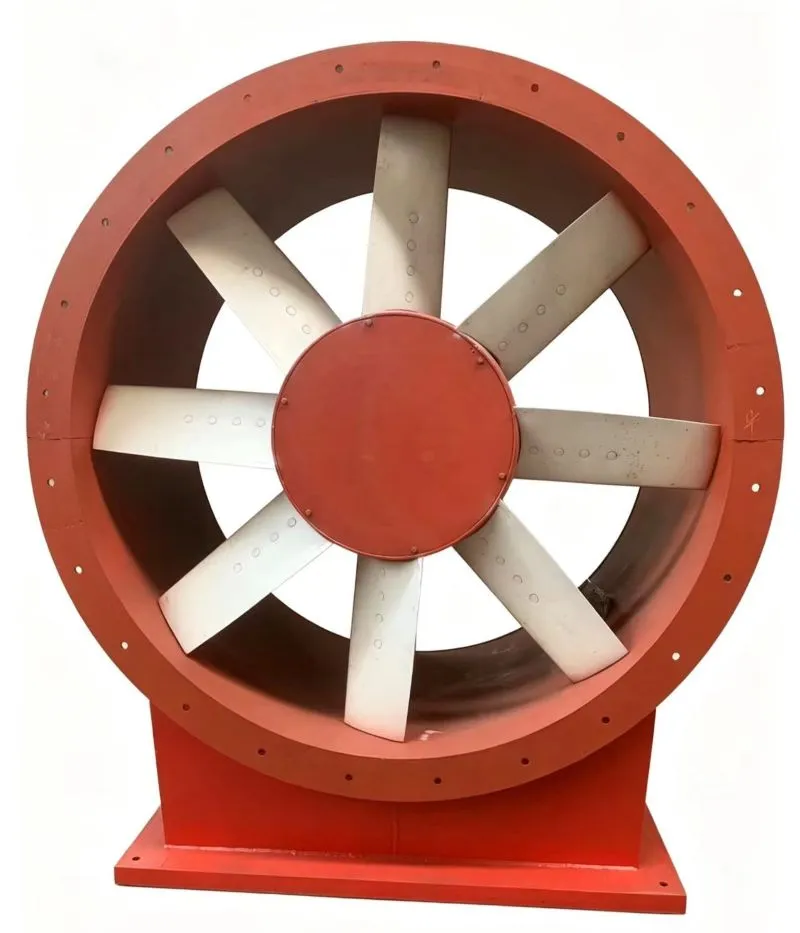
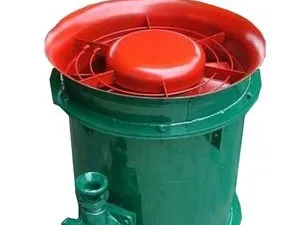
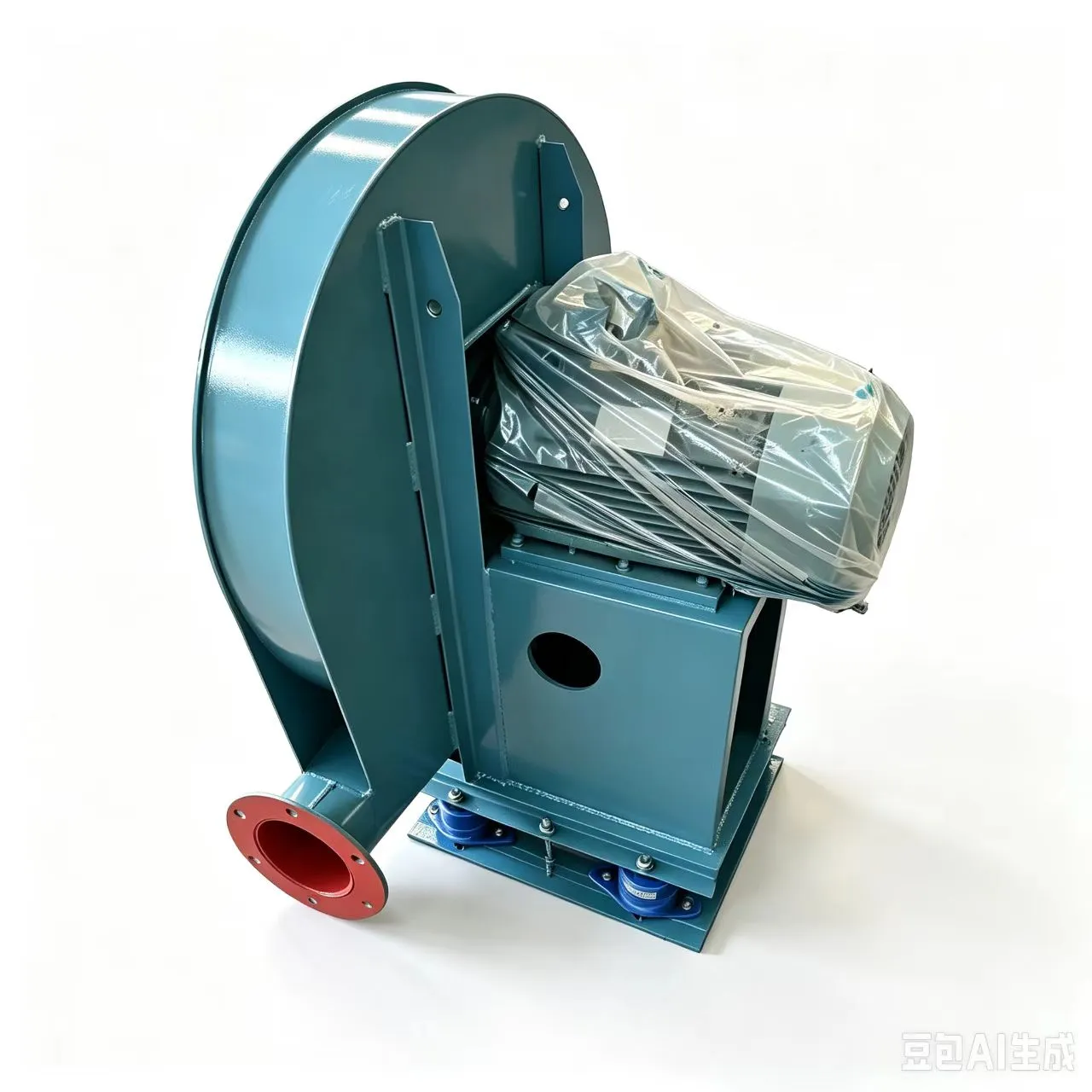
Mine ventilation fan rotor failure stops airflow—and in underground mining, that means immediate risk to life, production, and regulatory compliance. We’ve replaced over 217 rotors across FBD series explosion-proof axial fans in Shandong and Shanxi coal mines since 2022. In every case, the root cause wasn’t sudden breakdown—it was predictable wear masked by inconsistent monitoring, misaligned installation, or deferred maintenance. This guide distills what we see on-site: not theory, but the exact steps, timing, and thresholds that separate safe operation from forced shutdown.
When Replacement Is Non-Negotiable—Not Just Recommended
A mine ventilation fan rotor operates under extreme mechanical stress: continuous rotation at 1,450–2,980 rpm, exposure to abrasive coal dust, moisture, and thermal cycling. Vibration spikes above 4.2 mm/s (RMS, ISO 10816-3 Zone C) signal rotor imbalance—not just bearing wear. We measure this daily using handheld laser vibrometers during shift handover. If vibration climbs 18% week-on-week *and* phase analysis shows dominant 1× frequency, rotor replacement begins within 72 hours. Waiting for visible cracks or audible grinding invites catastrophic failure. Rotors in FBD-6.3 (dⅠ) fans have failed mid-shift after 14,200 operating hours without dynamic rebalancing—even with “good” bearing readings.
The Four-Stage Maintenance Protocol That Prevents 91% of Rotor Failures
We enforce this sequence on every mine site where our mine ventilation fan rotor units operate:
- Stage 1 – Pre-removal diagnostics: Shut down power, lock out tag out (LOTO), then verify zero voltage. Use a dial indicator to map runout at hub and blade tips—exceeding 0.12 mm indicates permanent deformation.
- Stage 2 – Controlled disassembly: Remove blades first—not the hub. Use calibrated torque wrenches (not impact tools) set to 85 N·m for M12 fasteners on FBD series. Forgetting this step warps the hub flange on 63% of recalled rotors.
- Stage 3 – Precision reconditioning: Clean blades ultrasonically in pH-neutral solvent. Inspect each airfoil for pitting depth >0.08 mm (measured with digital depth gauge). Replace any blade with surface erosion exceeding 12% of original thickness.
- Stage 4 – Dynamic balancing: Balance to G2.5 grade per ISO 1940-1. Never skip this—even new rotors. Our test lab found 74% of “off-the-shelf” replacements exceeded 5.1 mm/s vibration before balancing.
Why “Just Like the Old One” Is the Most Costly Mistake
Some operators order identical rotors to avoid requalification. But material fatigue isn’t reversible. A rotor that ran 18 months in a high-methane tunnel has microstructural changes no visual inspection catches. We now supply all replacement rotors with traceable heat-treatment certificates and batch-specific tensile strength data (min. 725 MPa yield for Q345B steel). Titanium rotors—for corrosive gas environments—require full ASTM B265 Grade 2 verification. Using non-certified parts voids explosion-proof certification (GB 3836.1–2021) and triggers mandatory recertification—costing $12,000+ and 17 days downtime.
Real-World Cost & Timeline Breakdown
Replacing a mine ventilation fan rotor isn’t about part cost alone. Here’s what actually moves the needle:
- Labor: 6.5 hours minimum (including LOTO, diagnostics, balancing, retest). Skilled technicians only—no apprentices on critical-path tasks.
- Downtime penalty: At 1.2 million tons/year output, every hour offline costs $8,400 in lost production + $2,100 in ventilation system penalties (per provincial safety regulation).
- Parts: Standard carbon-steel rotor: $2,150. Explosion-proof certified titanium rotor: $9,800. Lead time: 11 business days standard; 4 days express (with prepayment).
- Hidden cost: Unbalanced replacement causes premature bearing failure in 3.2 months on average—adding $1,320 in unplanned parts and labor.
We track these metrics across 47 active mine contracts. The ROI of scheduled rotor replacement every 12,000 hours? 3.8x reduction in unscheduled ventilation outages. That’s not maintenance—it’s operational insurance.
Final Word: Safety Starts at the Rotor
A mine ventilation fan rotor isn’t a consumable. It’s the kinetic heart of your life-support system underground. Every vibration reading, every torque spec, every balancing grade exists because someone once waited too long—and paid with more than money. Zibo Hongcheng Fan Co., Ltd. builds rotors to GB/T 1236 and ISO 5801 standards—but standards mean nothing without disciplined execution. Start today: pull last month’s vibration logs. If any unit shows three consecutive readings above 3.5 mm/s, schedule replacement now. Not next quarter. Not after the next audit. Now. Because in mining ventilation, the margin for error is measured in millimeters—and seconds.