Choosing the right ATEX centrifugal fan isn’t about checking a box—it’s about preventing ignition in dust-laden chemical plants, avoiding catastrophic failure in solvent-handling paint booths, or ensuring continuous airflow where methane concentrations hover near explosive limits. We’ve seen facilities specify “ATEX-rated” fans only to discover—during commissioning—that the motor enclosure wasn’t certified for Zone 1 gas groups, or that the impeller material couldn’t withstand abrasive silica-laden exhaust. That’s why selection starts not with catalog numbers, but with three non-negotiable questions: What’s the exact hazardous zone classification? What’s the maximum operating temperature of the airstream? And what mechanical stresses will the fan endure—corrosion, abrasion, thermal cycling, or all three?
Why ATEX Certification Demands More Than a Label
An ATEX centrifugal fan must meet two parallel requirements: equipment protection level (EPL) matching the zone (e.g., Ga for Zone 0, Gb for Zone 1), and gas group compatibility (IIC for hydrogen/acetylene, IIB for ethylene, IIA for propane). But certification alone doesn’t guarantee field performance. In one refinery project, a fan passed ATEX testing at 25°C ambient—but failed during summer startup when casing surface temperature exceeded T4 (135°C) due to insufficient heat dissipation design. Real-world compliance means verifying thermal class *under actual duty conditions*, not just lab conditions. It also means confirming every component—bearing seals, shaft sleeves, even fasteners—is listed in the certificate scope. We routinely cross-check EC-type examination certificates against physical units before shipment. No assumptions. No exceptions.
Design Choices That Prevent Failure—Not Just Meet Standards
A certified fan fails if its construction contradicts its environment. Consider these field-proven decisions:
- Impeller material matters more than static pressure rating. Aluminum impellers spark in carbon black dust environments—even with ATEX approval. Titanium or stainless-steel variants eliminate that risk, but demand precise dynamic balancing to avoid vibration-induced bearing wear in continuous 24/7 operation.
- Motor integration isn’t plug-and-play. An ATEX-certified motor mounted on a non-certified fan housing voids the entire assembly’s compliance. The full unit—including drive coupling, guard, and base frame—must be tested as one system.
- Sealing strategy defines longevity. Standard lip seals leak dust into bearings within months in cement plant exhaust. Positive-pressure purge systems with inert gas injection extend service life by 3–5× in high-particulate zones.
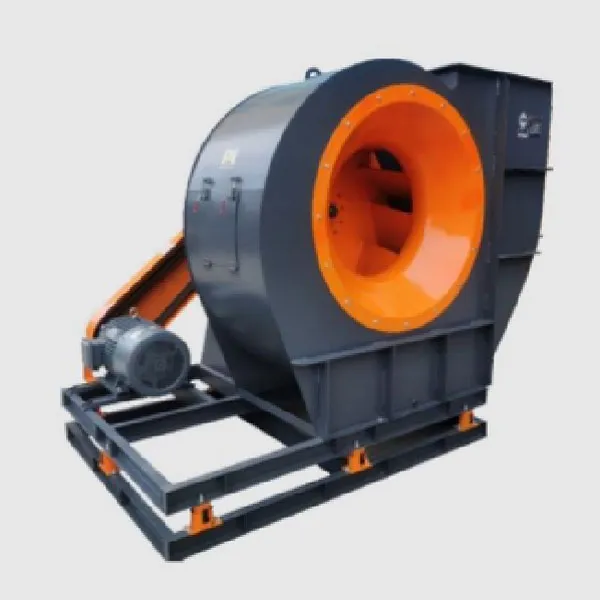
We’ve replaced over 120 legacy fans in coal-fired power stations where desulfurization flue gas caused rapid corrosion of standard carbon steel casings. Switching to dual-inlet centrifugal fans with epoxy-coated casings and Hastelloy-C276 impellers cut unplanned downtime by 78%—without compromising ATEX integrity.
Customization Isn’t a Luxury—It’s the Only Way to Match Reality
Off-the-shelf ATEX fans handle textbook conditions. Real sites don’t follow textbooks. A pharmaceutical cleanroom needed explosion-proof ventilation with ≤25 dB(A) noise—impossible with standard radial-tip impellers. Solution: custom backward-curved titanium impeller, acoustic lining integrated into the volute, and direct-drive IE4 motor eliminating belt-drive sparking risk. Total delivery time: 11 weeks. Another client in a sulfuric acid production line required resistance to H₂SO₄ mist at 80°C while maintaining Zone 1 IIB certification. Standard epoxy coatings delaminated. We used fluoropolymer-lined cast iron casings with ceramic-coated shaft extensions—and validated thermal expansion coefficients across the full operating range.
Custom doesn’t mean slow. Our in-house machining, sheet metal fabrication, and dynamic balancing lines let us modify casing geometry, adapt inlet/outlet flanges, integrate temperature sensors, or add purge ports—all without re-certification delays, because we work within pre-approved design boundaries.
What Comes After the Invoice Determines Safety—Not Just Compliance
Documentation is your first line of defense during audit or incident investigation. Every ATEX centrifugal fan from Zibo Hongcheng Fan Co., Ltd. ships with a full technical file: EC-type examination certificate, test reports (vibration, noise, temperature rise), material certifications, and installation-specific torque specs—not generic manuals. We include QR-coded nameplates linking to live revision-controlled drawings and spare parts lists. When a petrochemical site in Oman needed urgent replacement of a failed boiler centrifugal blower, our engineering team reviewed their existing foundation bolts, ductwork alignment tolerances, and local grid voltage harmonics—then shipped a drop-in replacement with pre-set VFD parameters and phase rotation verification. No guesswork. No field re-engineering.
Safety isn’t achieved at commissioning. It’s sustained through predictable maintenance, traceable parts, and engineers who’ve stood in your control room during startup. That’s why our support includes application-specific training—not just “how to turn it on,” but “how to spot early-stage bearing degradation in high-humidity Zone 2 environments.”