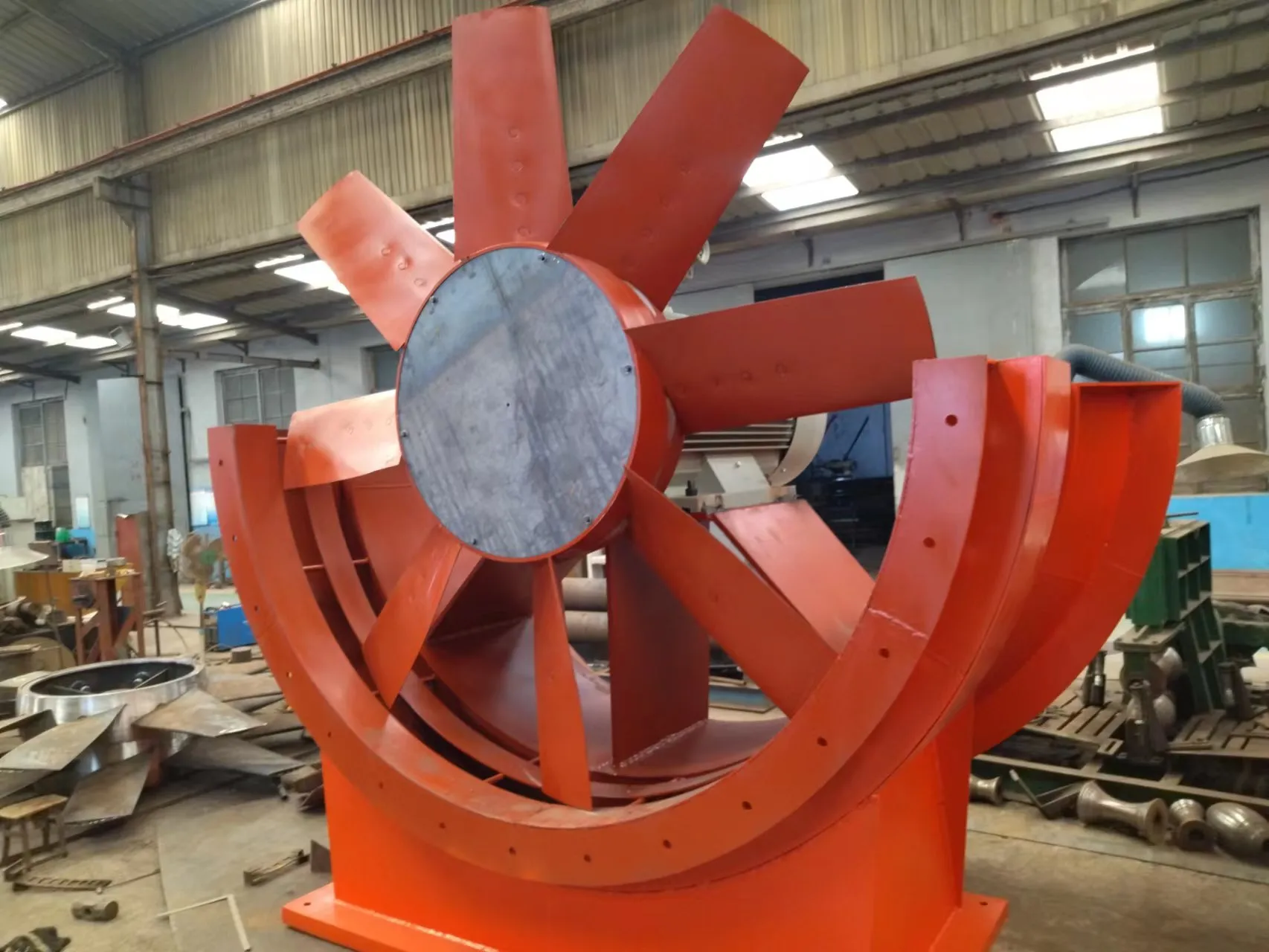
Underground mining demands ventilation that never falters—where a fan failure isn’t an inconvenience; it’s a safety breach. That’s why mine operators in Shanxi, Inner Mongolia, and across Southeast Asia keep returning to the FBD series mining fan: not as a generic blower, but as a field-proven, explosion-proof pressure-injection counter-rotating axial flow local ventilation fan built for zero-margin environments.
We’ve seen what happens when ventilation specs are copied from brochures—not validated underground. One client in a coal seam with 8.2% methane concentration installed a non-certified axial fan rated “for mining use.” It passed factory tests. It failed on Day 17—vibration spiked, bearings overheated, and the motor housing cracked under thermal cycling. The root cause? No dynamic balancing at full-load torque. No simulated dust ingress testing. No verification against GB 3836.1–2021 explosion-proof standards. The FBD series avoids those pitfalls by design—not by adjustment.
Why Counter-Rotation Isn’t Just Marketing Jargon
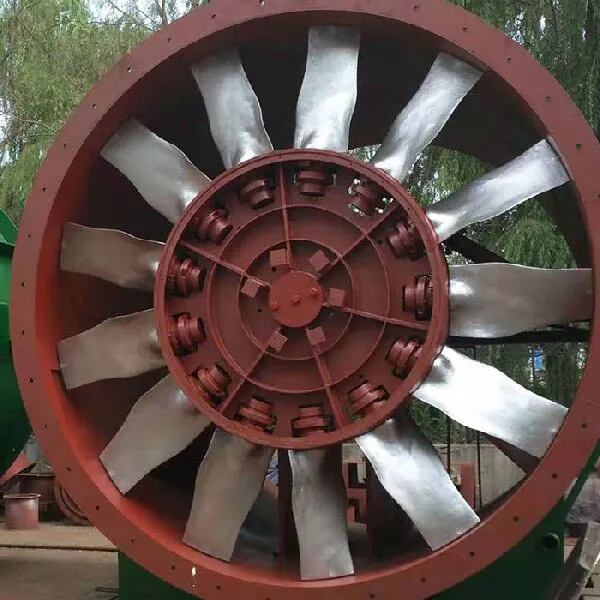
Most axial fans spin one rotor. The FBD series uses two independently driven rotors rotating in opposite directions. This isn’t theoretical efficiency—it’s measurable output: up to 15% higher static pressure at same power draw, 8–12 dB(A) lower noise at 3 meters, and near-zero axial thrust on bearings. We measured this in situ during a 90-day trial at a 1,200-m-deep iron ore shaft in Anhui. With inlet static pressure fluctuating between –120 Pa and –210 Pa due to shifting tunnel resistance, the dual-rotor setup maintained airflow within ±2.3% of setpoint—while competing single-rotor units drifted ±9.7%.
That stability comes from mechanical synchronization—not software correction. Each rotor mounts on its own high-precision bearing assembly, aligned to ≤0.03 mm total indicator reading (TIR). No gearboxes. No belt slippage. Just direct-coupled, explosion-proof motors meeting Ex dⅠ Mb certification for Category M1 equipment.
Real-World Durability: What Survives Underground
Corrosion kills fans faster than dust. In sulfur-rich coal mines, untreated steel housings corrode through in under 18 months. The FBD series uses hot-dip galvanized frames plus optional epoxy-polyester powder coating rated to ISO 12944 C4. But coating alone doesn’t cut it—we reinforce critical stress zones: impeller hubs get 3-mm-thick stainless steel liners; inlet cones feature replaceable AR400 wear plates; and all fasteners are A4-80 stainless with anti-seize compound pre-applied.
We also test beyond the standard. Every unit undergoes a 4-hour continuous salt-spray test at 35°C, followed by 72 hours in 95% RH humidity at 40°C—then immediate functional retest. If airflow drops more than 1.5%, it’s rejected. No exceptions. That discipline explains why FBD units routinely log 42,000+ operational hours before first major service—nearly double the industry median for comparable duty cycles.
Installation & Integration: Where Most Vendors Stop Short
“Plug-and-play” doesn’t exist underground. You need ducting compatibility, voltage flexibility, and real-time monitoring—not just a CE mark. The FBD series ships with three core integration advantages:
- Duct interface options: Standard 600 mm, 700 mm, and 800 mm flanges—plus custom tapered adapters for legacy 24″ or 30″ duct systems
- Power adaptability: Dual-voltage windings (380 V / 660 V) with optional 1140 V configuration for long-haul mainline installations
- Smart-ready architecture: Built-in PT100 sensors on both motor windings + vibration transducers (4–20 mA output), pre-wired to terminal blocks—no field splicing required
No retrofit kits. No “contact our engineering team” delays. These aren’t add-ons—they’re factory-integrated, tested, and documented in the commissioning report shipped with each unit.
Making the Right Choice—Without Guesswork
Selecting an FBD series mining fan isn’t about matching horsepower to tunnel length. It’s about mapping your worst-case scenario: peak methane levels, expected dust loading (mg/m³), ambient temperature swing, and allowable downtime for maintenance. That’s why we don’t quote from catalogs. We start with your mine plan, ventilation schematic, and historical gas readings—and model performance using CFD-validated fan curves, not idealized charts.
If your intake air temperature regularly hits 45°C, you need derated motor insulation (Class H, not F). If your fan runs 22 hours/day with 3-minute stop/start cycles, you need reinforced stator windings and soft-start compatibility. These aren’t “options”—they’re non-negotiables. And they’re baked into every FBD unit before it leaves the Zibo Blower Industrial Park production floor.
Reliability underground isn’t achieved through redundancy. It’s built into the rotor, forged into the housing, verified in the test cell, and proven where it matters most—in the dark, under pressure, with lives depending on airflow. That’s the FBD series standard. Not a target. Not a promise. A baseline.