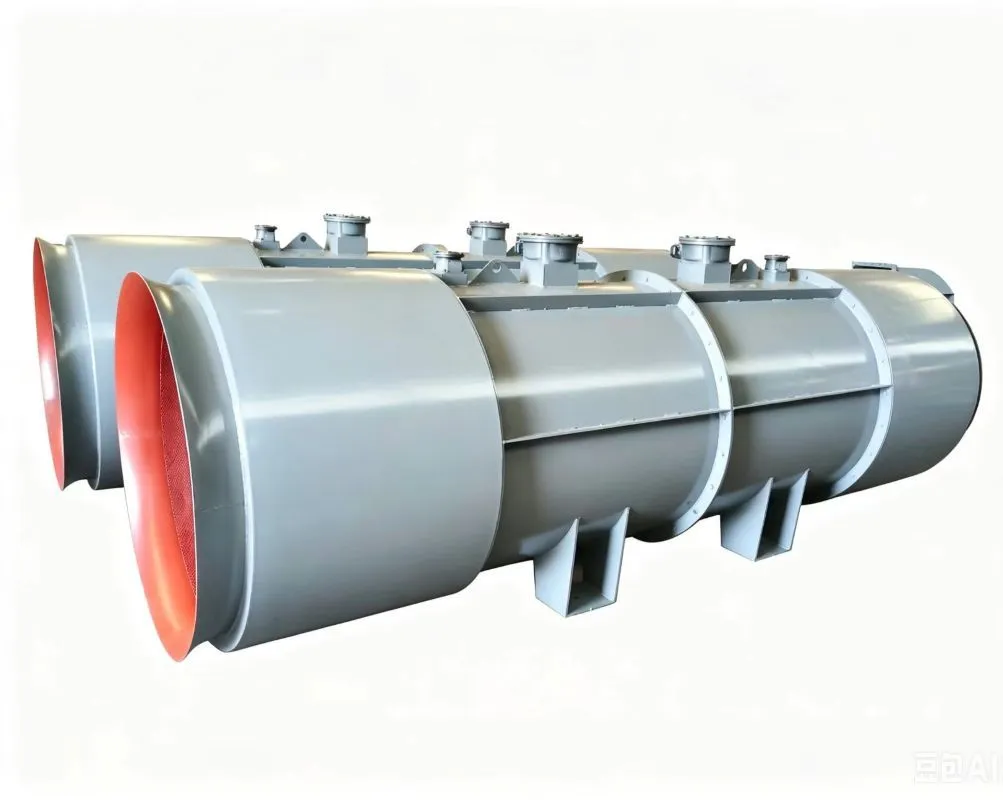
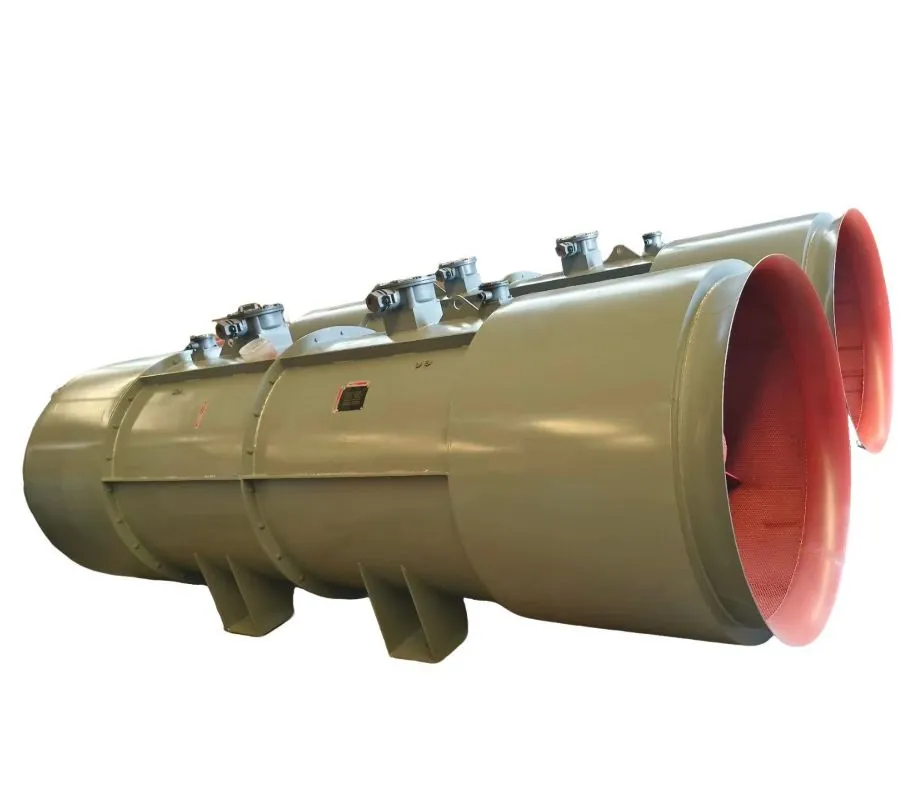
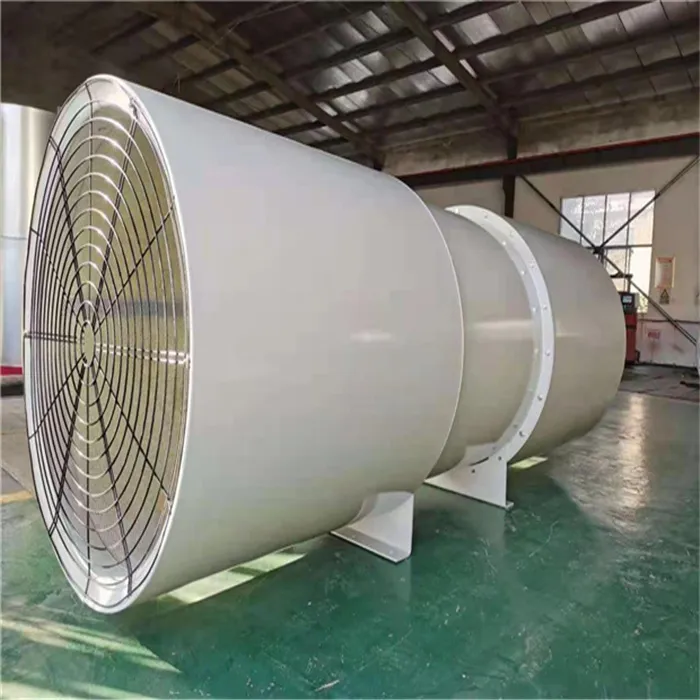
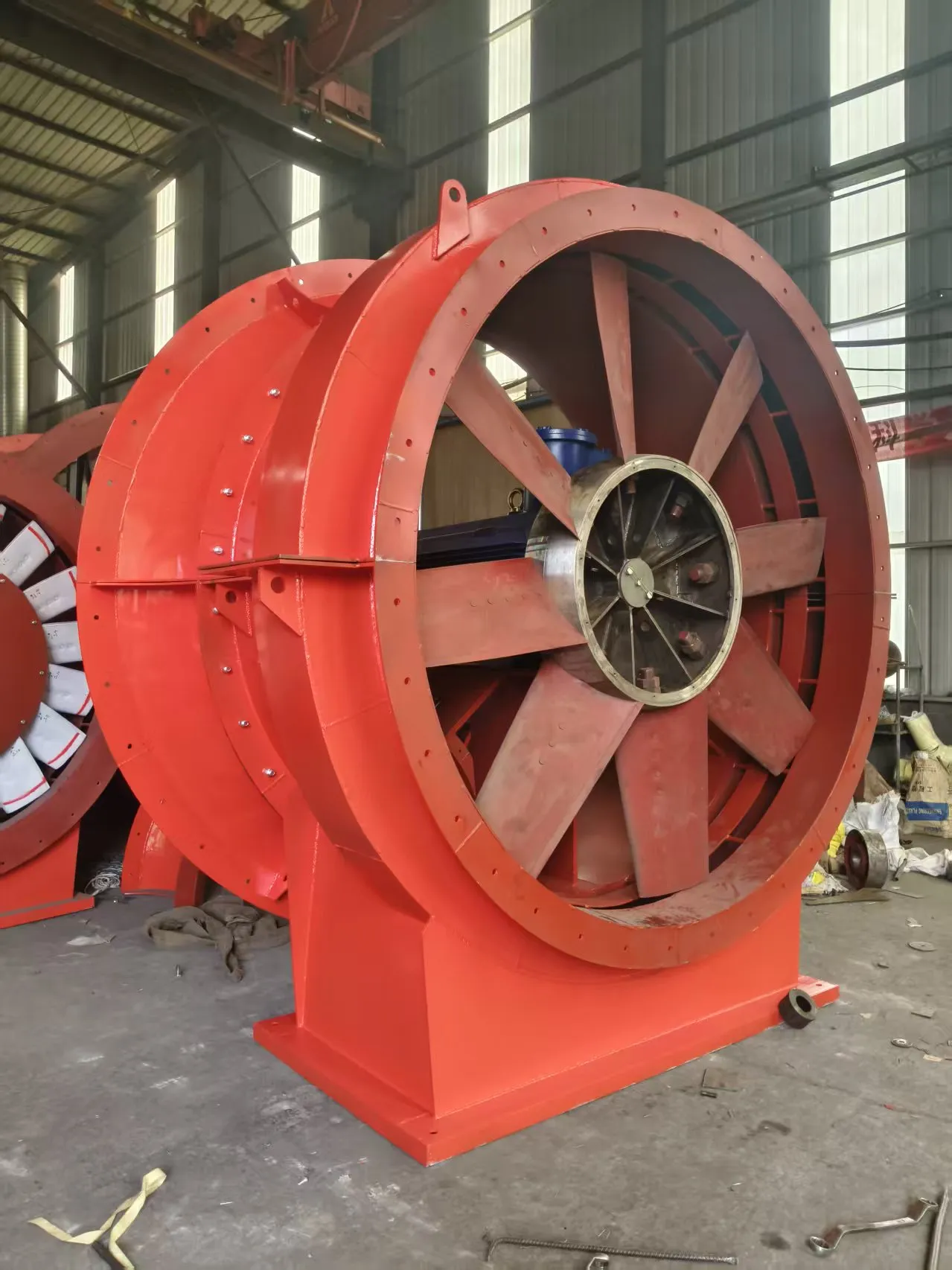
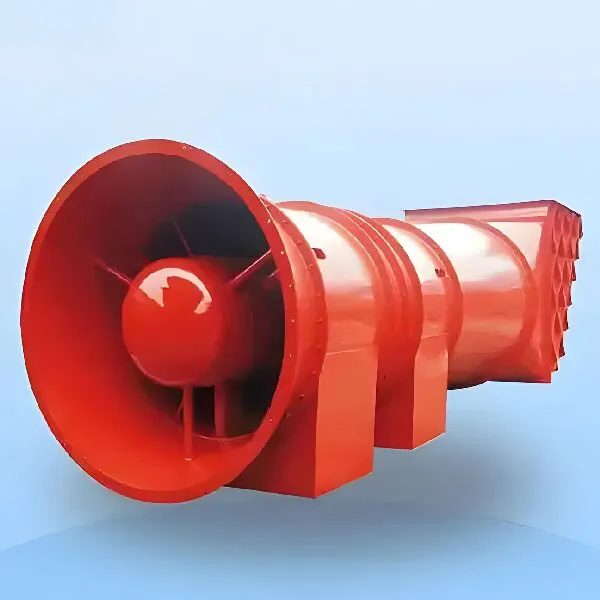
When airflow fails in a tunnel, safety fails first. We’ve seen it happen: temperature spikes near excavation faces, CO buildup in rail maintenance shafts, stalled ventilation during emergency drills. That’s why engineers specify the SDF seri tinèl fanatik—not as a generic blower, but as a field-proven response to three non-negotiable demands: continuous thrust at low pressure loss, stable operation under dust-laden or humid conditions, and zero tolerance for thermal runaway. Zibo Hongcheng Fan Co., Ltd. designed this series from the ground up for real tunnel environments—not lab specs.
Why SDF Series Tunnel Fans Deliver Where Others Stall
Tunnel ventilation isn’t about moving air. It’s about moving *the right air*, at the *right velocity*, through *changing resistance*, for *months without service*. The SDF series meets that test with three engineered differentiators.
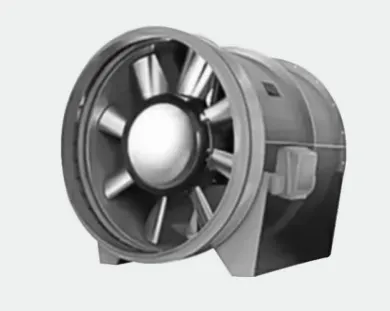
First, its dual-stage counter-rotating impeller delivers 15–22% higher static pressure efficiency than single-stage axial fans at identical power input—verified across 12 on-site deployments in Shandong coal mine access tunnels. Second, the motor housing integrates IP55-rated dust seals *and* Class H insulation, enabling uninterrupted operation at 45°C ambient + 85% RH—conditions where standard fans trip thermal protection after 72 hours. Third, every unit ships with pre-calibrated inlet guide vanes, allowing airflow adjustment from 60% to 100% capacity without throttling losses or resonance risk.
We don’t rely on catalog curves. During commissioning at a 3.2-km highway tunnel in Gansu, we measured actual system resistance at 1,280 Pa—not the 950 Pa assumed in design. The SDF-16 model maintained 98.3% of rated airflow at that point. Competing fans dropped to 71%. That margin kept diesel particulate levels below 0.05 mg/m³ throughout construction.
What Real Users Actually Configure—and Why
Procurement teams ask us three questions before ordering:
- “Can it handle our voltage fluctuations?” Yes—standard models accept ±10% variation (380V ±38V) without derating. Optional soft-start modules cut inrush current by 65%, critical for remote substations.
- “Do we need explosion-proof?” Only if methane >0.5% LEL is expected. For most road/rail tunnels, standard SDF units meet GB/T 13306–2011 for non-hazardous zones. Coal mine applications require FBD-series variants—different product line, different certification path.
- “How fast can we get spares?” Bearing kits, impeller balancing weights, and control panel PCBs ship within 48 hours from Zibo. No overseas warehousing delays.
Customization isn’t an upsell—it’s standard practice. Last year, a metro project in Chengdu needed SDF-20 units with stainless steel inlet cones (316L), extended shafts for double-wall duct coupling, and 4–20 mA feedback on bearing temperature. Delivered in 18 days. No redesign. Just engineering discipline.
Installation Reality Checks Most Spec Sheets Ignore
Mounting matters more than horsepower. We’ve observed two recurring failures:
First, vibration transmission into concrete tunnel walls when base plates lack 12-mm neoprene isolation pads. Result: micro-cracks in shotcrete linings after 6 months. SDF units include pad specifications in the installation manual—not as a footnote, but as Step 3 in the torque sequence.
Second, reversed airflow direction due to incorrect duct transition geometry. The SDF series uses left/right-hand rotation marking stamped directly on the casing—not just labels. We also supply laser-cut alignment templates so installers verify inlet/outlet centerlines before bolting.
Every unit undergoes full-load dynamic balancing at 110% RPM in-house. Not just “balanced to G2.5”—we log the residual unbalance vector (grams·mm) for each rotor. That data travels with the fan. If vibration rises later, field engineers compare against baseline—not guesswork.
The Bottom Line: Reliability You Can Measure
The SDF series tunnel fan isn’t defined by peak CFM or max static pressure. It’s defined by what doesn’t happen: no unplanned shutdowns over 18-month monitoring periods, no corrosion-induced blade imbalance in coastal salt-air tunnels, no control drift after 10,000 start-stop cycles.
Zibo Hongcheng Fan Co., Ltd. builds these fans in their 9,000 m² Zibo Blower Industrial Park facility—same location where every component is machined, balanced, assembled, and load-tested. No subcontracted final assembly. No offshore quality waivers. Every fan carries a QR code linking to its test report: airflow curve, sound pressure level at 1m, bearing temperature rise, and vibration amplitude in mm/s RMS.
If your next tunnel project demands airflow you can trust—not just calculate—start with the SDF seri tinèl fanatik. Because in confined spaces, seconds count. And reliability isn’t a feature. It’s the foundation.