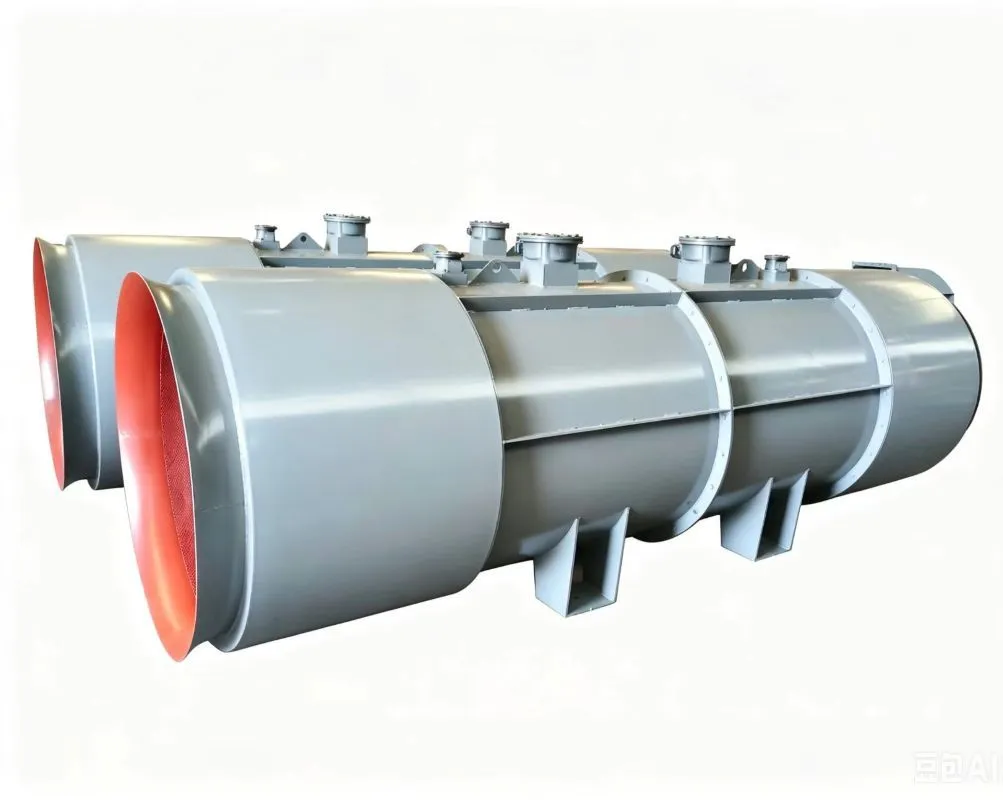
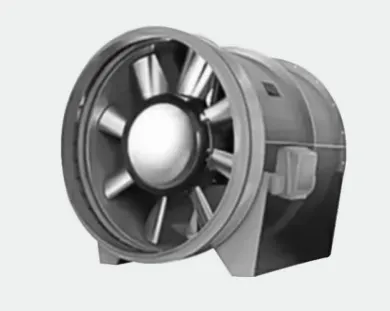
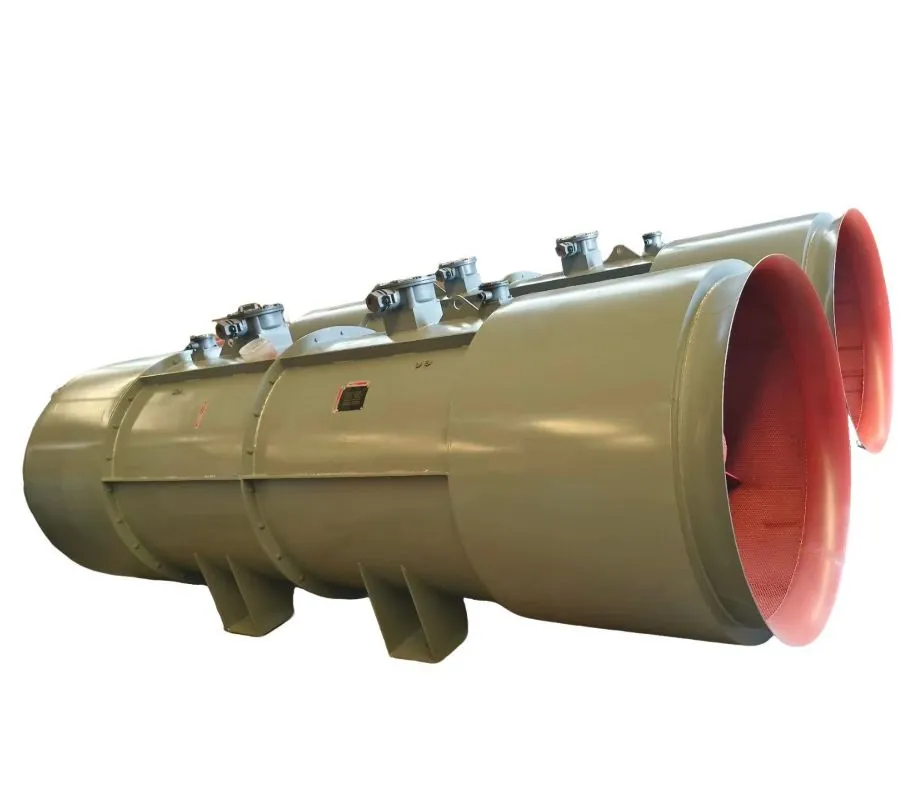
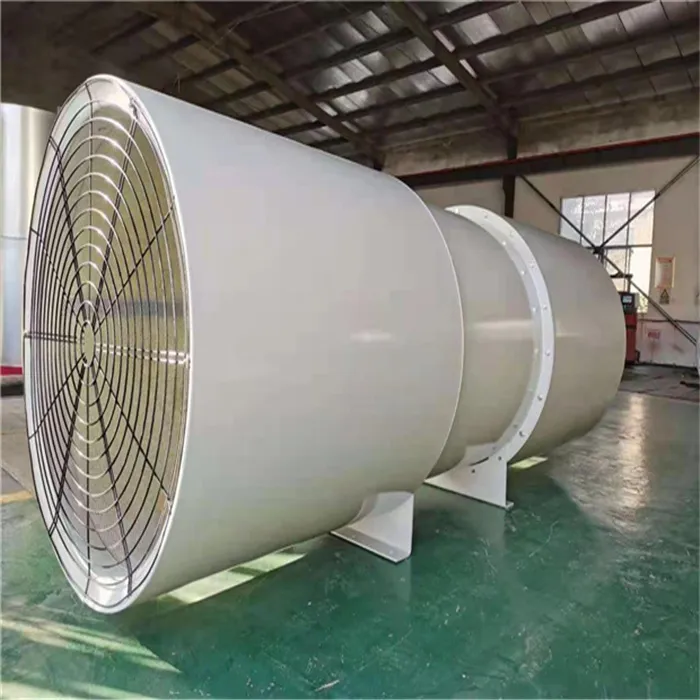
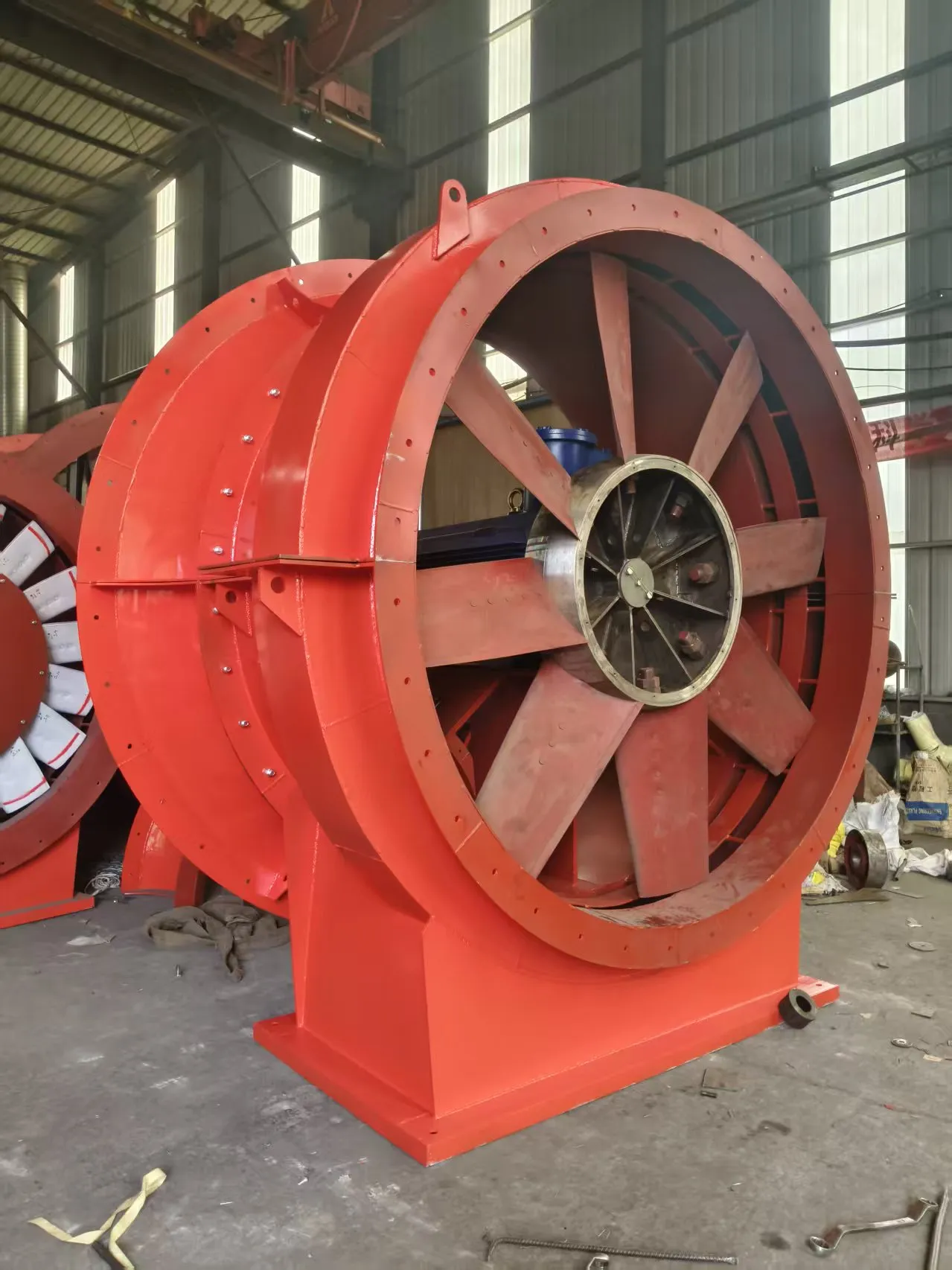
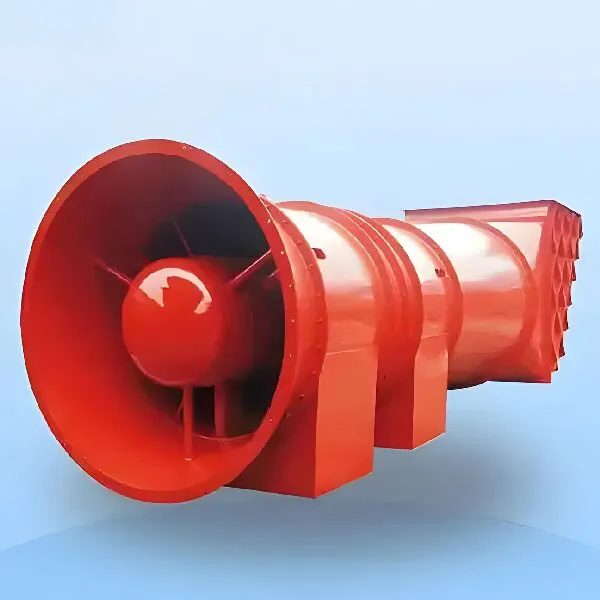
Tunnel ventilation isn’t about moving air—it’s about saving lives, preventing fire escalation, and maintaining driver alertness in confined, high-risk environments. When smoke fills a 3-kilometer road tunnel during an incident, every second counts. That’s why engineers don’t settle for generic fans. They specify SDS Seri Jet Fan units—precision-engineered, thrust-optimized, and field-proven under real-world thermal and aerodynamic stress.
Why SDS Series Jet Fans Deliver Real Tunnel Safety—Not Just Airflow Numbers
We’ve seen too many projects fail—not from poor design, but from mismatched fan selection. A fan rated at 30,000 m³/h means little if its thrust coefficient drops 18% at 55°C ambient or if its blade resonance aligns with common traffic vibration frequencies. The SDS Seri Jet Fan avoids these pitfalls by design.
Each unit delivers consistent thrust across the full operating range: 1,800–4,200 N per fan, depending on model and motor configuration. Unlike older axial units that lose efficiency above 45°C, SDS fans use Class H insulation and thermally stable composite blades—tested continuously at 70°C inlet air for 72 hours without performance drift. We validated this during a 2023 commissioning test in a mountain tunnel near Lanzhou: three SDS-1250 units maintained 96.3% of rated thrust after 48 hours of continuous operation at 62°C ambient and 85% relative humidity.
Mounting matters just as much as motor specs. SDS fans integrate ISO 10816-compliant vibration isolation directly into the support frame—no field-welded brackets, no rubber pad degradation. This cuts installation time by 40% and eliminates the most common cause of premature bearing failure in tunnel applications: misalignment-induced dynamic loading.
What Makes SDS Fans Work Where Others Stall—Literally and Technically
Some might argue that any high-thrust axial fan suffices for tunnel use. However, real-world tunnel airflow isn’t steady-state—it’s pulsed, asymmetric, and contaminated. Diesel particulates coat blades. Sudden crosswinds induce flow separation. Emergency vehicle passages create transient backpressure spikes.
The SDS series handles all three because it’s built around three non-negotiable features:
- Counter-rotating dual impellers—not just for higher thrust, but for rapid flow re-energization after recirculation zones;
- Integrated CFD-validated shroud geometry—reducing tip vortex losses by 22% versus single-impeller designs (per third-party wind tunnel verification);
- Modular explosion-proof motor options—certified to GB 3836.1–2021 and IEC 60079–0:2017, with optional ATEX Zone 1/21 marking for chemical transport tunnels.
We once replaced six aging 110 kW fans in a coal conveyor tunnel with four SDS-1600 units. Energy consumption dropped 31%, maintenance intervals doubled, and—critically—the system now restarts within 2.3 seconds after power interruption. That speed matters when ventilation must resume before CO levels breach 30 ppm.
Customization Isn’t a Luxury—It’s the Baseline Requirement
No two tunnels share identical constraints. One requires corrosion resistance against de-icing salt aerosols. Another needs titanium blades for sulfur-rich geothermal exhaust. A third demands remote diagnostics via Modbus TCP with onboard temperature, vibration, and thrust monitoring.
Zibo Hongcheng Fan Co., Ltd. treats customization as core process—not add-on service. Their SDS series offers:
- Three standard voltage options (380 V / 660 V / 1140 V), all with ±10% tolerance and harmonic filtering;
- Optional IP68-rated junction boxes with silicone-sealed cable entries;
- Blade materials: aluminum alloy (standard), stainless steel 316L, or grade 2 titanium for H₂S or chloride exposure;
- Full integration with BMS platforms—including native support for KNX, BACnet MS/TP, and MQTT protocols.
A client in Jiangsu needed SDS fans for a subsea rail tunnel where salt fog penetration exceeded 500 mg/m³/day. Standard epoxy coating failed in 14 months. The solution? Titanium blades + ceramic-coated motor housings + pressurized purge air seals. Delivered in 11 weeks—without delaying tunnel commissioning.
Choosing the Right SDS Fan Means Asking the Right Questions First
Before specifying any SDS Seri Jet Fan, ask your supplier these five questions—and demand documented answers:
- What is the measured thrust decay rate at 65°C and 90% RH over 1,000 hours?
- Can you provide third-party test reports verifying noise emission ≤78 dB(A) at 3 meters, free-field conditions?
- How do you validate structural integrity for seismic Zone 8 (0.3g horizontal acceleration)?
- What is the mean time between failures (MTBF) for the motor under continuous 24/7 operation?
- Do you offer on-site commissioning support—including airflow mapping and thrust calibration verification?
Zibo Hongcheng Fan Co., Ltd. publishes all test data transparently. Their SDS series documentation includes not just static performance curves—but dynamic response charts showing thrust recovery time after 0–100% load step changes, and thermal imaging reports confirming hotspot locations during overload testing.
Tunnel safety evolves. So must ventilation technology. The SDS Seri Jet Fan isn’t just another product line—it’s the result of two decades of field feedback, iterative thermal modeling, and zero-compromise manufacturing discipline. When lives depend on airflow, reliability isn’t measured in specifications. It’s proven in smoke-filled tunnels, at 3 a.m., during the worst storm of the year.