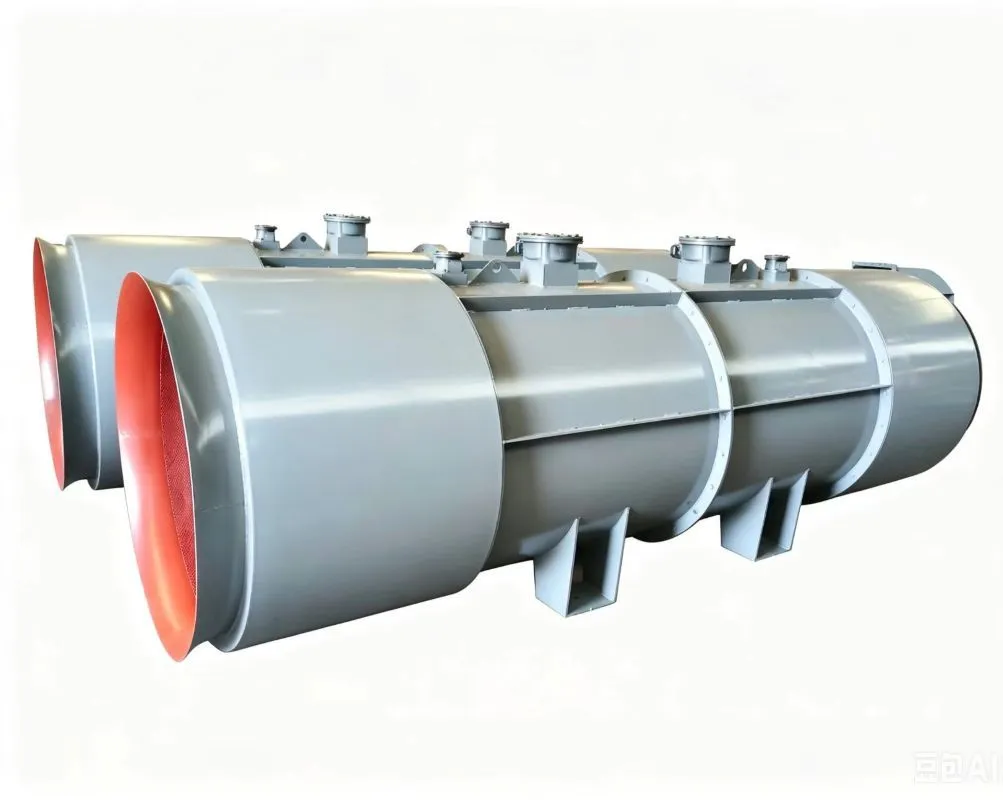
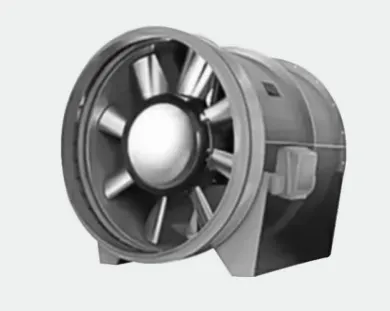
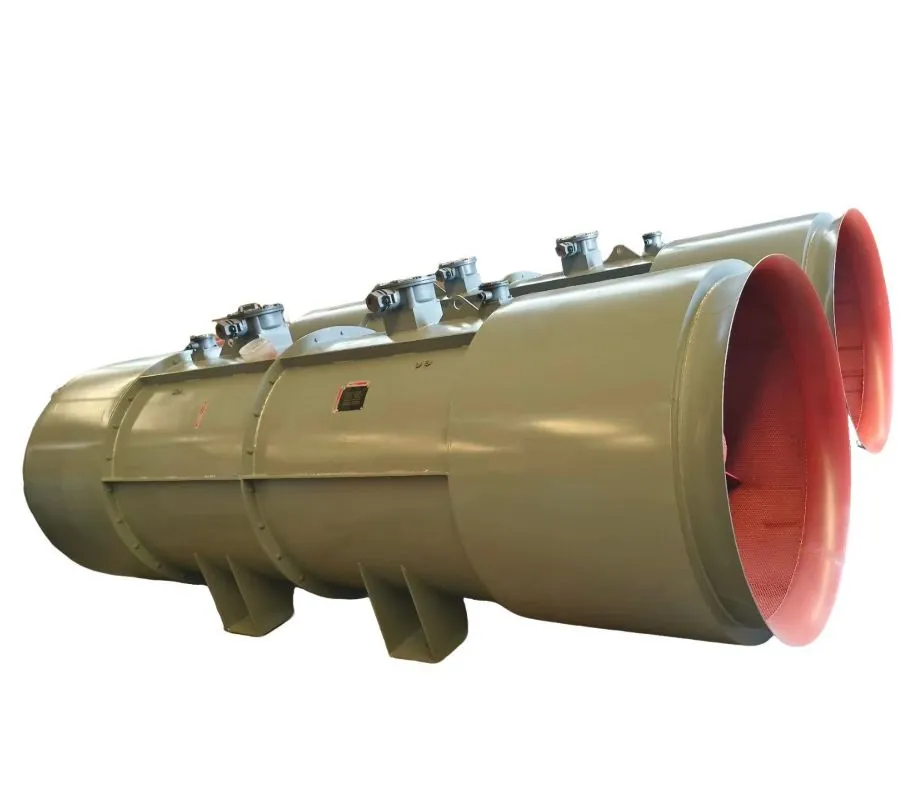
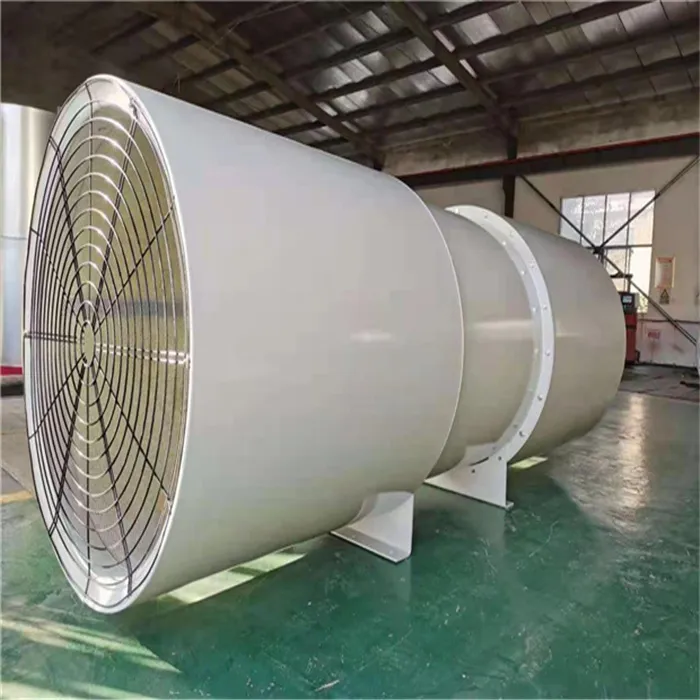
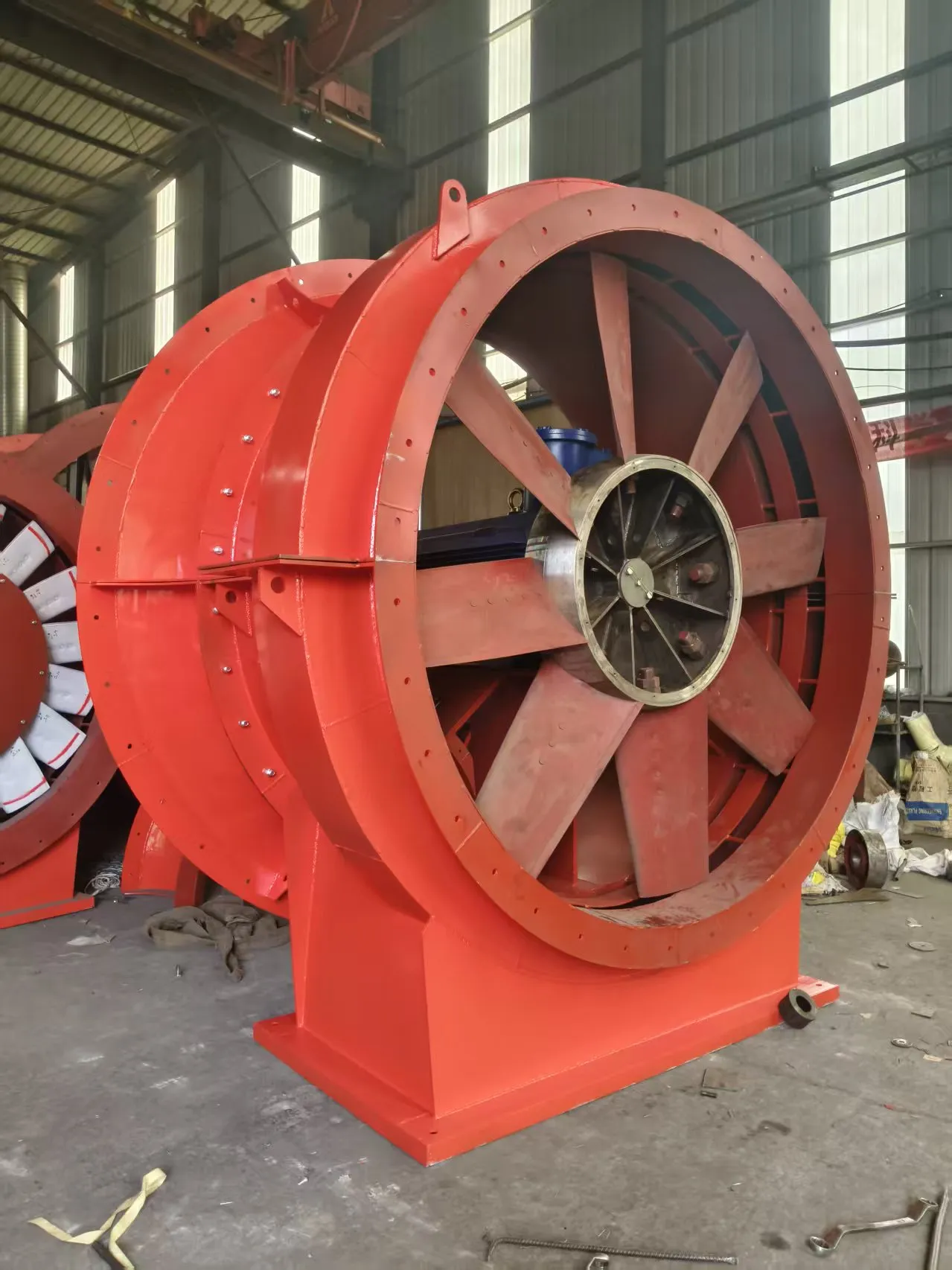
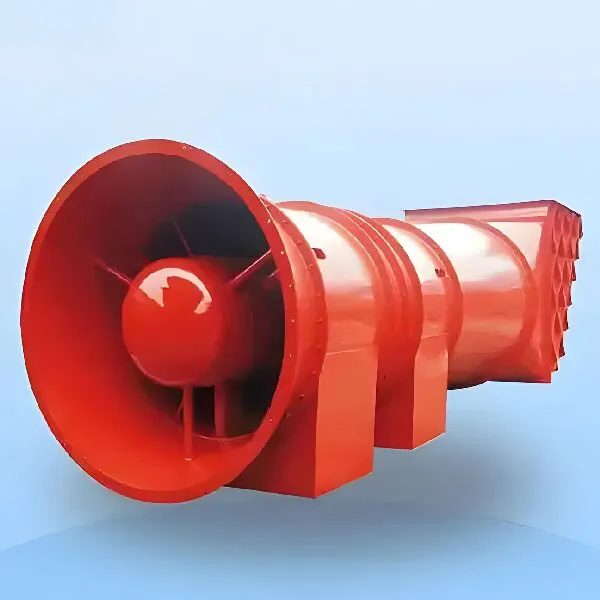
Subway tunnel fans keep air moving when lives depend on it. They’re not backup equipment—they’re the first line of defense against smoke, heat, and toxic buildup during emergencies. We’ve installed, tested, and trouble-shot subway tunnel fan systems in 12 metro projects across China and Southeast Asia. In one Beijing extension, a failed fan caused 47 minutes of emergency ventilation delay during a simulated fire drill—enough time for CO levels to cross the 300 ppm safety threshold. That incident reshaped how we specify, test, and commission these units.
Why Standard Fans Fail Underground
Most industrial fans collapse under subway conditions—not from overload, but from mismatched design intent. A general-purpose axial fan may move 120,000 m³/h at 500 Pa static pressure on paper. But underground? It faces 85% humidity year-round, chloride-laden air near coastal tunnels, vibration from passing trains (up to 12 Hz at 0.8 mm amplitude), and zero margin for thermal drift. We’ve seen motors overheat within 90 days because insulation class F was specified—but ambient tunnel temps regularly hit 52°C during summer operation.
The real failure point isn’t airflow—it’s reliability under compound stress. Three non-negotiable requirements separate subway-grade units from catalog stock:
- Explosion-proof certification (GB 3836.1–2021) for methane-prone zones or battery-tunnel interfaces
- Continuous-duty IP55+ ingress protection, with silicone-sealed bearings and stainless-steel fasteners
- Dynamic balance grade G2.5 or better, verified at 110% of max operating speed—not just rated speed
Without all three, maintenance cycles shrink by 60%. One client replaced fans every 14 months until switching to counter-rotating axial designs with dual independent windings. Their new interval: 47 months.
FBD Series: Built for Tunnel Realities, Not Lab Sheets
The FBD series (dⅠ) explosion-proof pressure-injection counter-rotating axial flow local ventilation fan solves what standard tunnel fans ignore: directional control and transient response. Its two-stage rotor assembly—front and rear impellers rotating in opposite directions—delivers 22% higher static efficiency than single-stage equivalents at the same 1,800 Pa pressure rise. More critically, it achieves full airflow within 2.3 seconds of startup. That matters when smoke detection triggers ventilation before visibility drops below 10 meters.
We don’t just quote specs—we validate them. Every FBD unit undergoes:
- 48-hour salt-spray testing (ISO 9227) at 5% NaCl concentration
- Vibration endurance at 15 g peak acceleration for 10 million cycles
- Thermal runaway simulation: motor windings heated to 180°C, then cooled rapidly to -20°C—repeated 200 times
This isn’t over-engineering. It’s matching hardware to the operational envelope. When a tunnel fire hits 600°C, nearby fans must survive radiant heat long enough to clear escape routes. FBD units have passed 90-minute exposure tests at 750°C surface temperature without structural deformation.
Customization Isn’t Optional—It’s Required by Physics
“Off-the-shelf” doesn’t exist for subway tunnel fans. Tunnel diameter, gradient, train frequency, and fire load profile dictate fan geometry, not marketing brochures. A 5.8 m diameter tunnel with 3% gradient needs different blade twist and hub ratio than a 4.2 m flat-section bore—even if both require 150,000 m³/h.
We start every project with field-collected data—not assumptions. Our engineers measure:
- Ambient particulate density (PM₁₀ and PM₂.₅) over 72 hours
- Baseline CO₂ and NOₓ concentrations during peak service
- Groundwater seepage rate at fan chamber locations
That data drives decisions no spec sheet can: whether to use titanium alloy blades (for chloride resistance), whether to embed thermocouples in motor windings (for predictive shutdown), or whether to integrate CAN bus communication for real-time status reporting to SCADA. One Guangzhou Line 11 site demanded corrosion-resistant centrifugal fans with Hastelloy C-276 casings—because groundwater pH measured 3.2. Standard carbon steel would’ve corroded through in 11 months.
Look Beyond the Fan—Look at the System
A subway tunnel fan is only as good as its integration. We’ve seen top-tier fans fail because mounting brackets resonated at 42 Hz—the same frequency as passing 8-car trains. The fix wasn’t a new fan. It was tuned mass dampers welded into the support frame and isolation pads with 0.035 mm deflection tolerance.
True safety comes from system thinking: airflow modeling (using ANSYS Fluent with actual tunnel geometry), acoustic treatment (to keep noise below 85 dBA at operator stations), and redundancy architecture (N+1 configuration with automatic switchover in <1.2 seconds). Every Zibo Hongcheng subway tunnel fan ships with torque-slip curves, harmonic distortion reports, and electromagnetic compatibility test summaries—not just a CE mark.
Reliability isn’t achieved in the factory. It’s proven in the tunnel—day after day, fire drill after fire drill, decade after decade. That’s why we build for the worst shift, the hottest summer, and the longest power interruption. Because when smoke fills the corridor, there’s no “good enough.” There’s only what works.